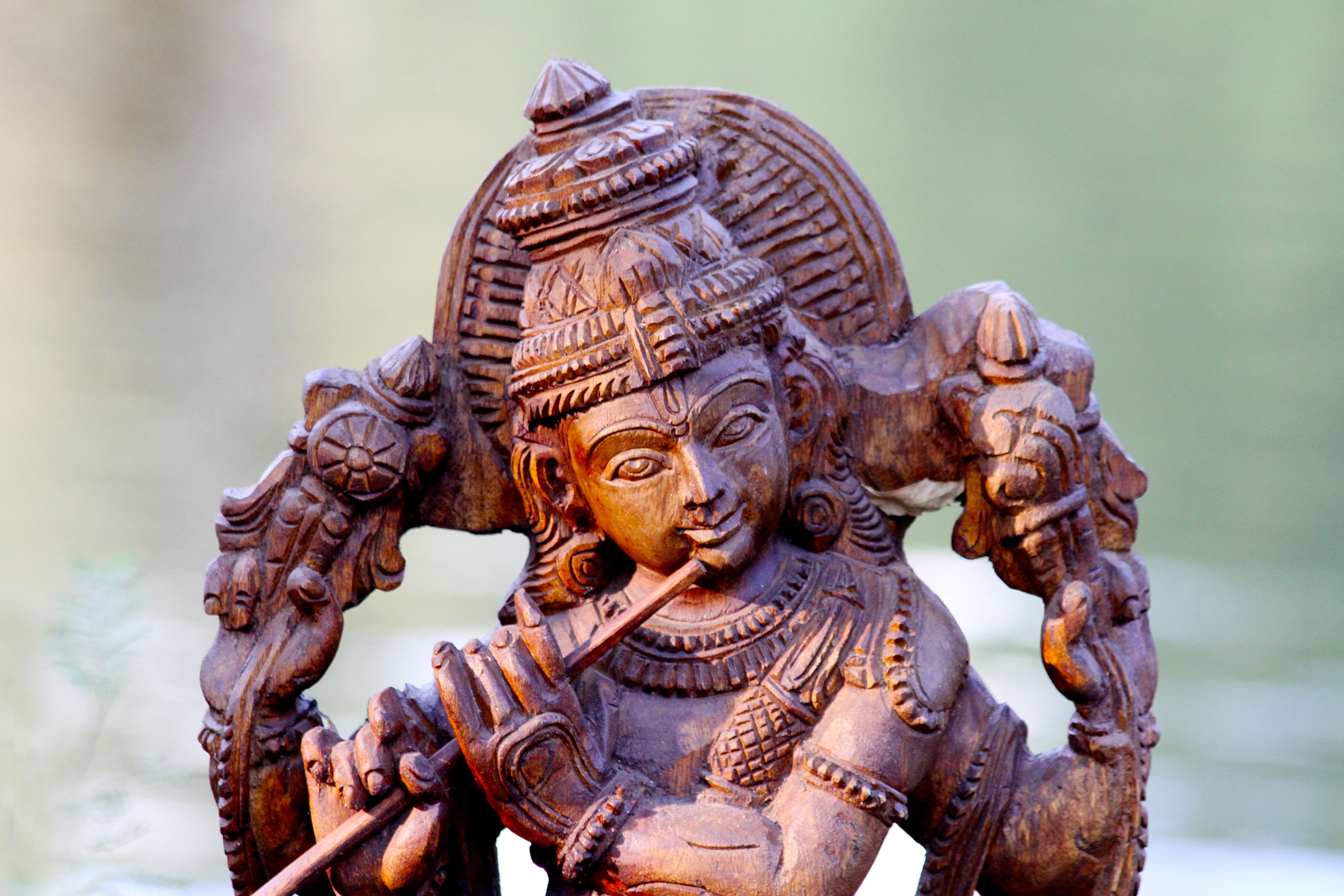



A Dharmic Nastik: culturally and philosophically Hindu, ethically committed to dharma, and atheist regarding a personal creator God.
What is a Hindu atheist?
A Hindu atheist is culturally or philosophically Hindu but does not believe in a personal creator god.
Theism is belief in one or more gods. Atheism is the absence of that belief. “Hindu”, however, is wider than belief in God. It can also describe a culture, a civilization, an ethical tradition and a family of philosophies.
So “Hindu atheist” is not a contradiction.
I am Hindu because I belong to this culture and take its philosophical questions seriously. I am an atheist because I do not believe in a supernatural “sky daddy” who created the world, watches us, judges us and intervenes in our lives.
Rejecting that god does not require me to reject dharma.
What is a Dharmic Nastik?
A Dharmic Nastik is a righteous or ethically grounded atheist.
I use the term for a person who does not believe in God but remains committed to dharma: truth, responsibility, compassion, restraint and right conduct.
This is a useful name for the position. I do not claim that it is the official name of one universally accepted school.
The older meanings of astik and nastik are also more complicated than the English words “theist” and “atheist”. In classical Indian philosophy, the distinction sometimes concerned acceptance of Vedic authority, not simply belief in God.
Here I use nastik in its common modern sense: a person without belief in God.
Are there different kinds of atheists?
I find it useful to distinguish three positions. This is my working classification, not a standard academic division.
- Dharmic atheist: A person who does not believe in God but tries to live through truth, responsibility, compassion and restraint. They examine traditional values instead of rejecting them merely because they came through religion.
- Adharmic atheist: A person whose conduct causes harm, or who uses the absence of God as an excuse for dishonesty, cruelty or irresponsibility. The problem here is the conduct, not atheism itself. A believer can also act adharmically.
- Nascent or unexamined atheist: A person who lacks belief but has not yet studied the philosophical, ethical or cultural questions around it. They may be newly questioning, unaware of the traditions, or simply at an early point in their inquiry.
“Nascent” is not an insult. Everyone begins without complete knowledge. A person can learn, change direction and move between these positions through life.
Does atheism mean that anything goes?
No.
Not believing in God does not mean that one may do “whatever” they want.
Imagine a road with no police officer nearby. I still should not drive into another person. Their life matters whether or not somebody is watching me.
Dharma works in a similar way. An action has consequences. Other beings can suffer. Trust can be broken. My behavior shapes my character and the society around me.
I can therefore have strong moral duties without believing that they came from a divine lawgiver.
Can an atheist still be Hindu?
Yes. Hindu thought includes traditions that do not depend on a creator god.
These traditions do not all say the same thing. Some question God. Some treat God as unnecessary to their explanation of reality. Some focus on knowledge, action, suffering or liberation instead.
A person can reject a personal god while remaining connected to Hindu culture and philosophical inquiry.
For me, being Hindu does not mean signing one statement of belief. It means belonging to a long conversation about life, mind, reality and right action.
Must atheism reject traditional values?
No.
Disbelief in a personal god does not require rejection of family, festivals, language, art, social memory or every value carried through tradition.
Tradition is neither automatically true nor automatically foolish. It must be examined.
I can keep what protects life, strengthens responsibility, preserves beauty and helps people live together. I can question or leave behind what causes harm, blocks truth or denies another person's freedom.
Blind acceptance is not wisdom. Blind rejection is not wisdom either.
Can a culture be taught to dislike itself?
Yes, but each claim needs evidence.
Competing political, religious, imperial and commercial forces have sometimes tried to weaken other cultures by presenting them as backward, irrational or shameful. Some efforts were deliberate. Other effects came through institutions, education, selective history and repeated comparison.
When such messages are repeated for long enough, people may absorb them. Criticism of a practice can turn into doubt about the whole civilization. Doubt can turn into embarrassment, self-sabotage, self-hate or loathing for one's own inheritance.
This does not mean that every criticism is a conspiracy. Hindu society has real faults and needs honest reform. Nor does it mean that every outsider is hostile. A broad accusation without evidence would repeat the same ideological mistake I oppose.
The answer is not cultural supremacy. It is informed self-respect: learn the tradition, test its claims, preserve what is valuable and reform what is harmful.
Where does Advaita fit?
Advaita Vedanta is not straightforward atheism. It accepts Brahman, the ultimate non-dual reality.
But Brahman is not a personal creator standing outside the universe. Advaita says that the deepest self and this ultimate reality are not separate.
Tat tvam asi means “You are That.”
This moves the question away from obedience to an external ruler. It asks us to examine consciousness, the self and the apparent separation between ourselves and the world.
A Dharmic Nastik does not have to accept Advaita. But Advaita shows that philosophical and spiritual depth need not begin with a personal god.
What do the different schools show?
Hindu and Bharatiya (Indian) philosophy contain sharply different schools of thought.
Nyaya studies logic and knowledge. Samkhya separates consciousness from material nature. Yoga works through disciplined practice. Mimamsa examines action and duty. Vedanta contains Advaita, Dvaita and other views about the self and ultimate reality.
Charvaka takes a materialist direction. It rejects a creator god, an immortal soul, an afterlife and supernatural karma.
These schools disagree. That is precisely the point: there has never been only one permitted answer to every philosophical question.
What does karma mean to a Dharmic Nastik?
I do not need to treat karma as invisible bookkeeping across future lives.
At its simplest, karma means action and consequence. What I do affects other people, changes the world and shapes my own habits.
If I lie repeatedly, I become less trustworthy. If I act with compassion, I reduce real suffering. These consequences matter in the life we can see.
Must everyone choose my path?
No.
Everyone is on their own journey and stands at a certain point along the way. A belief that makes sense to me today may not make sense to another person. I may also learn and change.
My core principle is non-imposition: I should not force my ideology upon another person.
I can explain, question and disagree. I can oppose conduct that causes harm. But I should leave another person free to examine God, atheism, Advaita, Charvaka or any other position and reach an honest conclusion.
Dharma guides how we treat one another. It should not become an excuse to control another person's mind.
Does non-imposition mean that nothing may be prohibited?
No.
I distinguish belief from conduct. A person's mind should remain free, but society may restrict conduct when a serious concern for life, dignity or public welfare justifies it.
I do wish a ban on cow slaughter to be imposed where it is feasible to do so. I do not base this only on belief in God. The cow represents nourishment, motherhood, patient service and gratitude within my civilisation. Compassion also matters because the animal can fear and suffer.
Feasibility matters. A serious policy must account for animal care, abandoned cattle, farmers' livelihoods, food security and enforcement. Otherwise, the language of protection can leave the living animal neglected.
I compare this boundary to the prohibition on killing human beings for consumption. My comparison is moral, not a claim that cow slaughter and cannibalism are identical acts or governed by identical laws everywhere. The point is that societies do impose firm limits where life and deep moral meaning are involved.
Non-imposition therefore does not mean moral indifference. It means that any restriction must have an ethical reason, be openly examined and be implemented with compassion rather than hatred.
What must an honest atheist remember?
Disbelief does not make me all-knowing.
Many statements only make sense when I understand their context. Many traditional stories and images are symbolic pointers rather than literal descriptions of physical events.
I should not accept every symbolic interpretation invented after the fact. But I should also not dismiss a teaching before asking what problem it was trying to address.
There is less that I know and much more that remains unknown. A sincere seeker needs patience and the courage to change their mind.
The ego wants to replace one dogma with another and then feel superior. A true seeker must let go of that need. “I do not know” is often a more honest beginning than a confident answer without evidence.
Can science and Advaita speak to each other?
Yes, if I keep their limits clear.
Science proceeds through evidence, measurement, experiment and correction. It is one of our strongest protections against wishful thinking.
Quantum physics has revealed superposition, entanglement and measurement results that do not fit ordinary classical intuition. These findings raise deep questions about separateness and what can be said about a system before measurement.
Some of these ideas may resemble pointers used in Advaita. The resemblance can inspire inquiry, but of course that is not yet a scientific proof of Advaita.
I can respect both science and philosophical inquiry without forcing either one to pretend to be the other.
What follows?
I can be Hindu without believing in a creator god.
I can value Hindu culture, study its philosophies and live by dharma. I can care about truth, compassion and the wider world without expecting a divine reward or fearing divine punishment.
That is what I mean by Dharmic Nastik: a righteous atheist rooted in dharma and committed to the freedom of thought.
Written with the help of Ai (ChatGPT). You are encouraged to point out errors and omissions.