

Hindu as a civilizational, cultural, ethical, and philosophical identity broader than belief in a personal God
What is Hindu?
“Hindu” is not only a religious label. It can describe a culture, a civilization and a family of philosophies.
There is no single founder, prophet or compulsory belief that every Hindu must accept other than the core principle of ‘live and let live’.
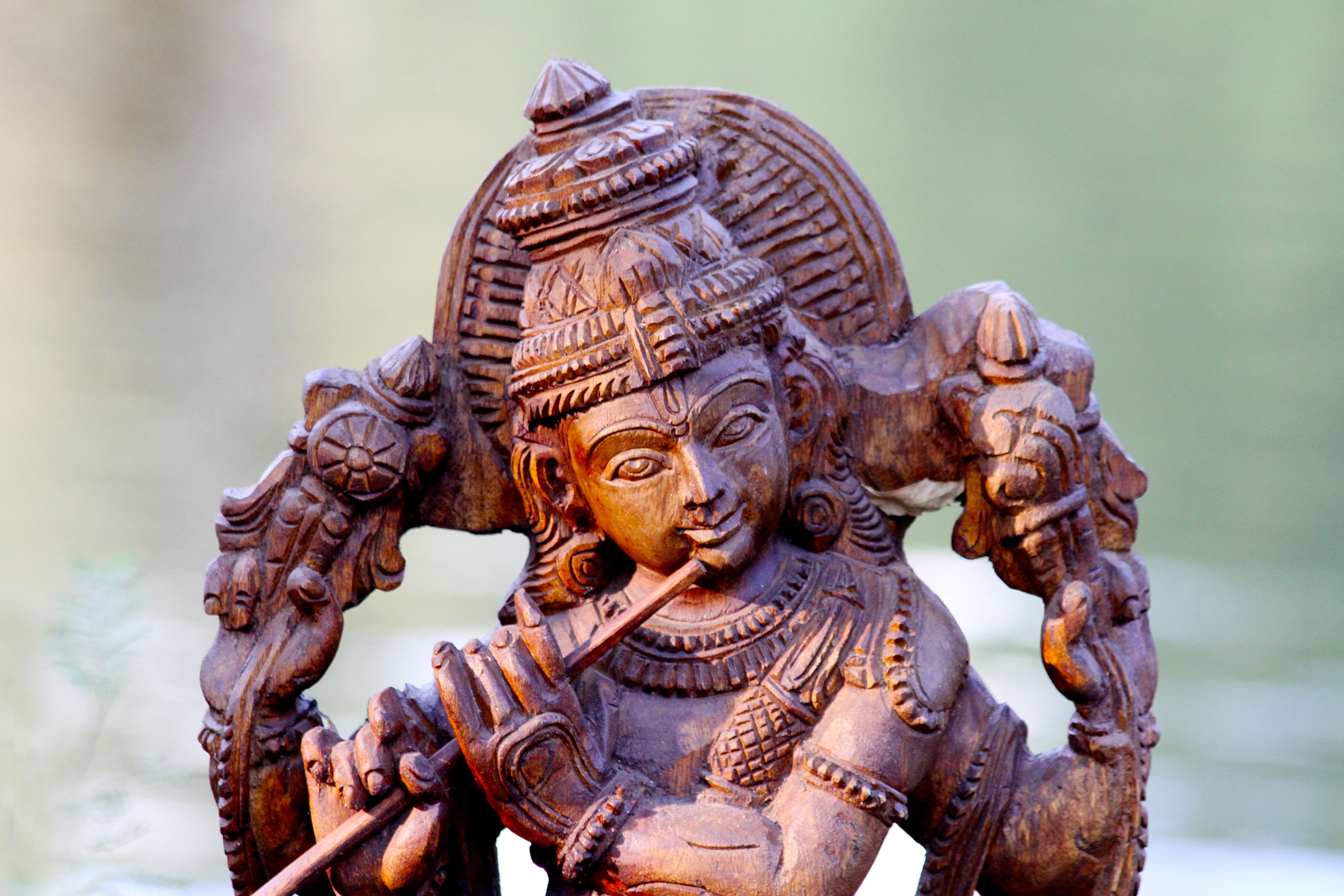
Some Hindus worship a personal god. Some think of the ultimate reality as impersonal. Some do not believe in a creator god at all.
Think of Hindu thought as a large old tree. Its branches grow in different directions, but they share a long history and many common ideas. Calling the whole tree a “religion” tells us something, but not enough.
What is dharma?
Dharma is the responsibility to live rightly.
It concerns truth, justice, restraint, compassion and our duties towards other lives. It is not simply an order given by God. It asks a practical question: what should I do here?
The answer can depend on the situation. A doctor, a parent and a judge have different duties. But none of them may act without caring about truth, harm and consequence.
Not believing in God does not mean that anything goes.
I do not need the fear of supernatural punishment to know that cruelty is wrong. Another person can suffer. Society depends on trust. My actions shape both the world and the person I become. That is enough reason to take dharma seriously.
Must a Hindu believe in God?
No. Hindu traditions disagree about God, the self, matter, knowledge and liberation.
Some are devotional and theistic. Some do not need a creator god. Others ask questions that do not fit neatly into “theist” or “atheist”.
This is why I place Hindu under philosophy rather than limiting it to religion. Religion is part of Hindu life, but it does not contain the whole of Hindu thought.
What does Advaita say?
Advaita Vedanta says that the deepest self and the ultimate reality are not separate.
Its well-known statement is Tat tvam asi: “You are That.”
Advaita calls the ultimate reality Brahman. Brahman is not a “sky daddy” sitting outside the universe, watching and judging us. It is not a personal god in that ordinary sense.
Advaita is not straightforward atheism because it still speaks of an ultimate reality. But it shows that Hindu philosophy does not depend on belief in a personal creator god.
What are the schools of thought?
Hindu philosophy contains several darshanas: different ways of seeing and examining reality.
The six classical schools that accept the Vedas as an authority are:
- Nyaya examines logic, reasoning and valid knowledge.
- Vaisheshika examines the kinds of things that exist and is known for its atomism.
- Samkhya distinguishes consciousness from material nature.
- Yoga develops disciplined practices for the mind and liberation.
- Mimamsa examines Vedic action, duty and interpretation.
- Vedanta examines the Upanishads and includes Advaita, Vishishtadvaita, Dvaita and other positions.
The wider Indian conversation also includes schools that reject Vedic authority. Charvaka is materialist and skeptical. Buddhism and Jainism reject the authority of the Vedas and developed independent philosophical traditions, but they emerged from the same broader Bharatiya (Indian) intellectual milieu and share with Hindu traditions many foundational ideas concerning ‘karma’, ‘rebirth’, ‘liberation’, ‘disciplined conduct’, ‘meditation’ and the ‘overcoming of ignorance’.
Many of these schools do not agree about God, the self, karma or what happens after death. Their disagreement is not a defect. It shows that inquiry was allowed to move in more than one direction.
What is karma?
Karma means action and its consequences.
Some traditions understand karma as a moral law extending across rebirths. A materialist such as Charvaka rejects that unseen account.
There is also a simple meaning that does not require the supernatural. What I do changes the world, affects other lives and shapes my habits. An action becomes part of the chain of causes from which the future grows.
Must everyone follow the same path?
No.
Every person is on a journey and stands at a certain point along the way. One person may need devotion. Another may need doubt. Another may find Advaita useful, while someone else may understand the world through Charvaka.
Freedom of thought matters because understanding cannot be forced.
The principle I draw from this is non-imposition: I should not impose my ideology upon another person. I may share, question and disagree. I should leave the other person free to examine and choose.
This does not mean that every action is right. Dharma still asks us to oppose harm, dishonesty and injustice. Freedom of belief is not freedom to harm.
Does non-imposition mean that nothing may be prohibited?
No.
Non-imposition protects freedom of thought and belief. It does not prevent society from restricting conduct when there is a serious ethical reason.
I do wish a ban on cow slaughter to be imposed where it is feasible to do so. For me, the cow represents nourishment, motherhood, patient service and a civilizational duty of gratitude. There is also a direct compassion argument: an animal capable of fear and suffering should not be killed merely because it is useful or edible.
By “feasible”, I mean that a law must also consider animal welfare, abandoned cattle, farmers' livelihoods, food security and practical enforcement. A ban without responsibility for the living animal can become symbolic politics rather than compassion.
I compare the moral boundary to society's prohibition on killing human beings for consumption. The comparison is ethical rather than a claim that cow slaughter and cannibalism are legally or morally identical in every respect. Communities already draw firm boundaries where life, dignity and profound social meaning are involved.
My position is therefore not “nothing should ever be imposed”. It is that beliefs should not be forced upon another mind, while harmful conduct may be limited through a justified, humane and workable law.
Why do context and symbols matter?
A statement can sound foolish when it is pulled out of the situation in which it was spoken.
Hindu texts grew across different times, places and audiences. The same word may carry an everyday meaning, a philosophical meaning or a symbolic meaning. A story about gods, demons, chariots, light or battle may be history to one reader, poetry to another and a symbol of the mind to a third.
A symbolic account is not necessarily a failed scientific account. It may use an image to point towards an experience or insight that ordinary language cannot hold neatly.
This does not mean that every old claim must be defended. It means that I should understand the context and purpose before accepting or rejecting it.
What must a seeker remember?
There is less that I know and much more that I do not know.
A true seeker therefore needs patience. Quick certainty can close the mind before inquiry has even begun.
The greatest obstacle may be the ego that wants to win, appear clever or defend an identity at any cost. To seek truth, I must be willing to say “I do not know”, listen carefully and let go of a conclusion when the evidence goes against it.
Letting go of ego does not mean losing reason or self-respect. It means placing truth above the need to be right.
Do science and Hindu philosophy oppose each other?
They need not.
Science studies the world through observation, measurement, experiment and correction. Philosophy examines meaning, knowledge, mind, conduct and the assumptions behind our explanations. They ask different but sometimes overlapping questions.
Quantum physics shows that nature does not always follow our everyday intuition. Superposition, measurement and entanglement force us to think carefully about separateness, properties and what can be known.
These mysteries can remind an Advaita reader of pointers towards unity and the limits of ordinary perception. That said similarity is not proof; Quantum physics does Not directly establish Brahman, Atman or Advaita.
Science should keep our claims honest. Philosophy can help us examine what those claims mean.
What follows?
A person may be Hindu through culture, ancestry, practice, philosophy or a commitment to dharma.
Neither one alone defines every Hindu.
For me, the important questions remain: What is true? Who am I? How should I live? What causes suffering? What is freedom?
Hindu philosophy gives us many ways to examine these questions. Its diversity should lead towards inquiry and humility, not the domination of one school over every other person.
Written with the help of Ai (ChatGPT). You are encouraged to point out errors and omissions.