



How switching, signaling and subscriber lines connect voice calls and data services.
What is a telephone network?
A telephone network connects endpoints so voice or other signals can travel between them.
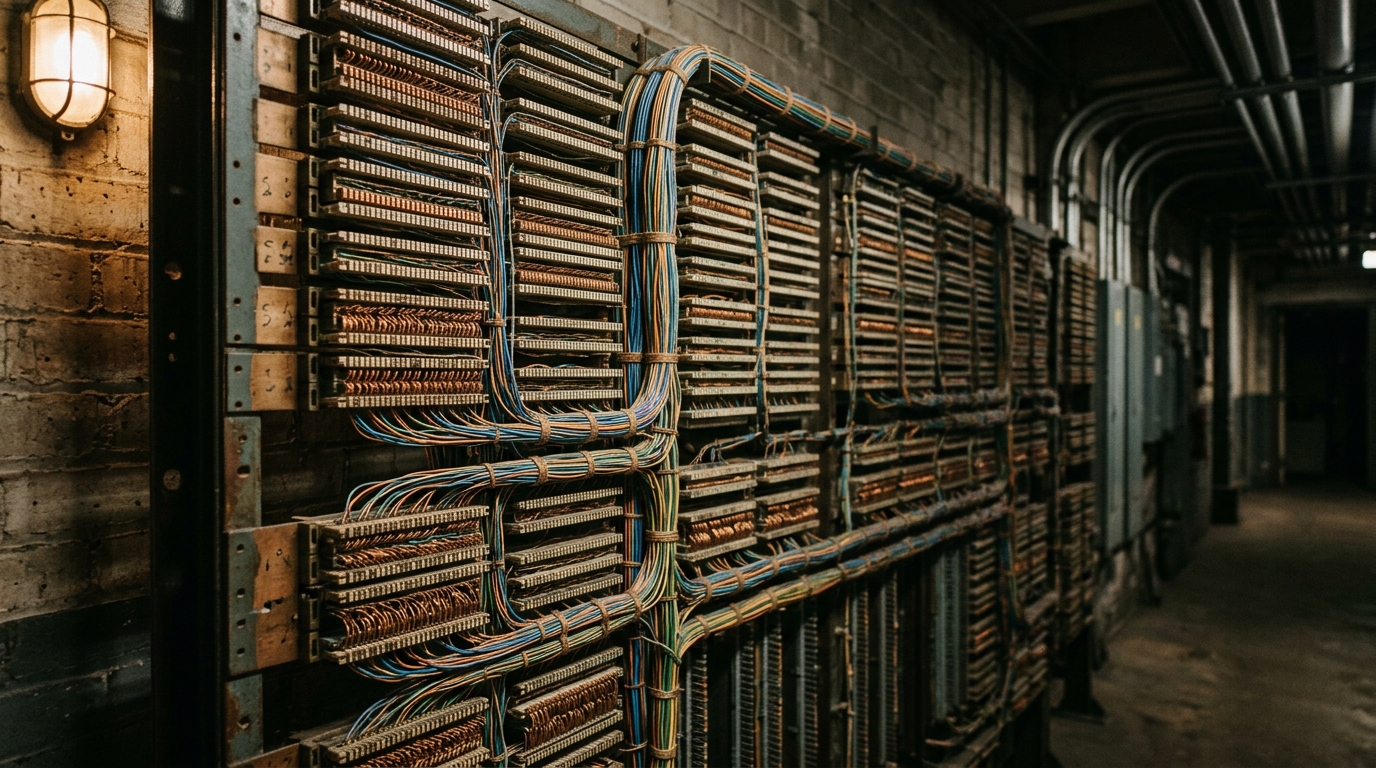
It includes subscriber lines, switches, signaling systems, trunks, numbering, timing and power.
How did it evolve?
Early calls used human operators and manually connected circuits. Automatic electromechanical switches followed, then digital switching and packet-based services.
Copper local loops remained important even as long-distance traffic moved through fiber and mobile networks.
Why does it matter to later technologies?
Dial-up modems, fax machines and DSL used the telephone network's copper access lines.
The same physical pair could carry different services when frequency ranges and equipment were carefully separated.
Future and legacy
Modern voice is often carried as packets, but the network's core ideas—addressing, signaling, switching, reliability and interconnection—remain central to the internet and mobile communications.
Ai disclosure: written with the help of AI (ChatGPT). You are encouraged to point out errors and omissions.