
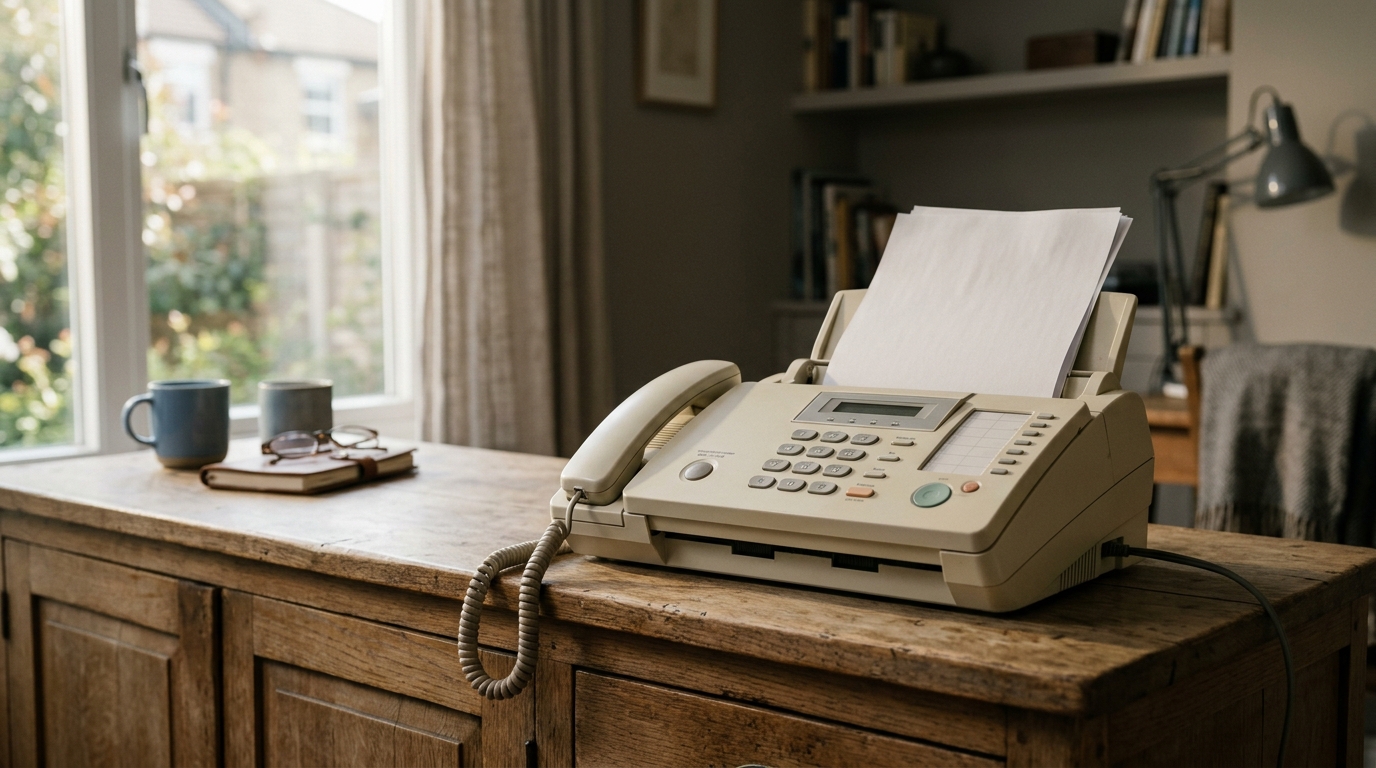
How scanned documents are converted into signals and reproduced at a distant machine.
What is fax?
Fax, short for facsimile, transmits a scanned representation of a document so a receiving machine can reproduce it.
The sending machine samples brightness, encodes the image and sends tones or digital data. The receiver decodes the signal and prints or stores the result.
Why was it useful?
Fax sent a recognizable document faster than physical mail and worked through ordinary telephone networks.
It became important in offices, medicine, government, contracts and international business before email and document platforms became widespread.
How did it work over phone lines?
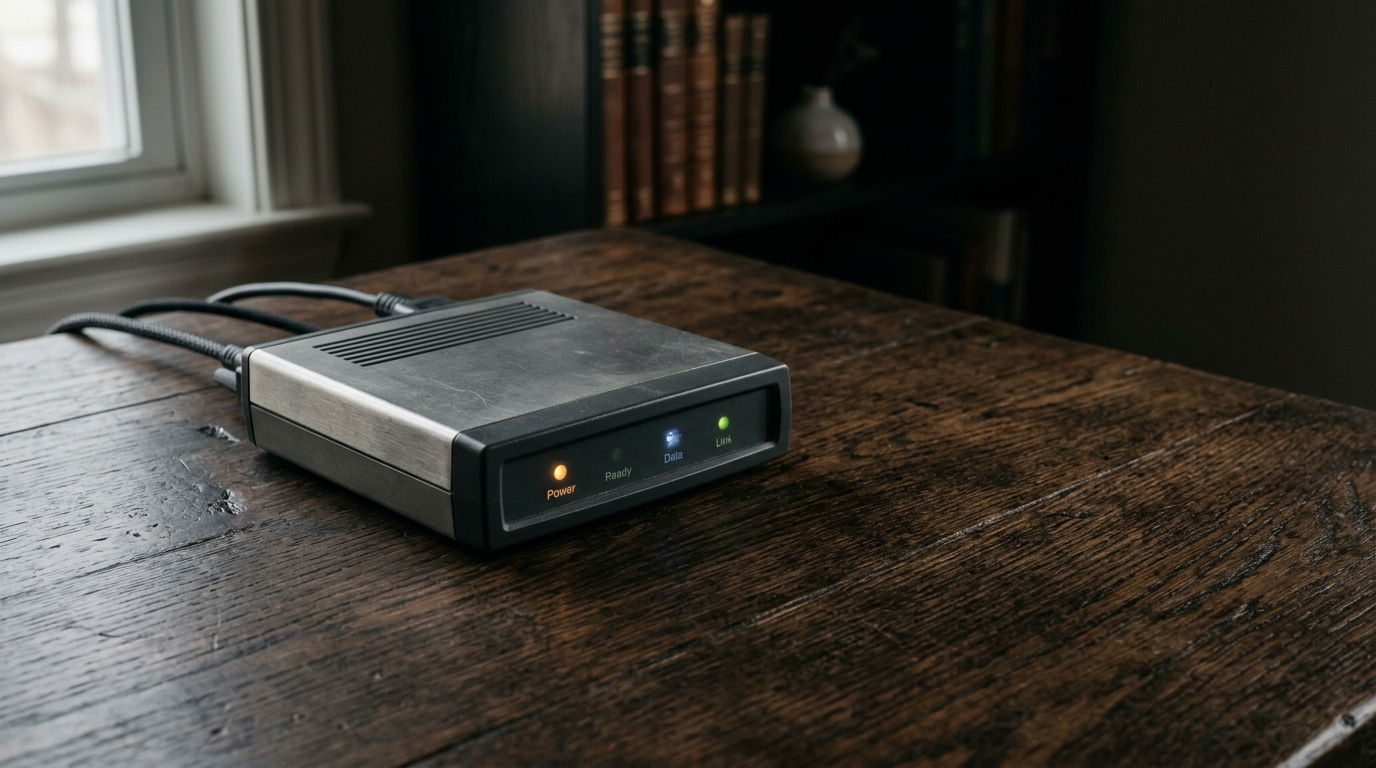
A fax machine used a modem to convert image data into audio-frequency signals. Negotiation established speed, modulation, resolution and error handling.
Limits and legacy
Fax quality depends on scanning, noise, line conditions, compression and paper handling. It is slower and less convenient than modern digital document exchange, but its example shows how a physical image becomes a robust signal for a limited channel.
Ai disclosure: written with the help of AI (ChatGPT). You are encouraged to point out errors and omissions.