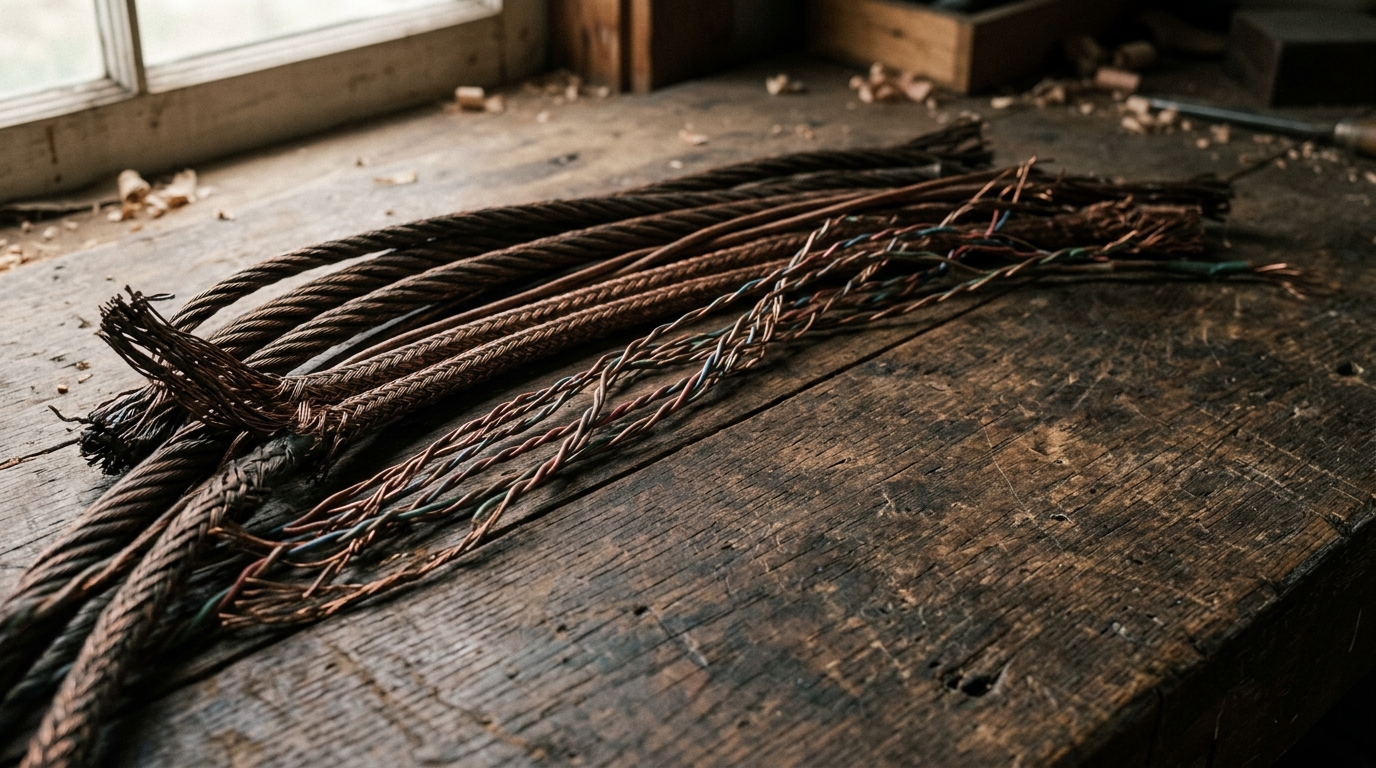




How digital subscriber line technologies use higher frequencies on copper telephone wiring for data.
What is DSL?
DSL, or digital subscriber line, is a family of technologies that carry digital data over copper telephone wiring.
It uses frequencies above the ordinary voice band, with modulation and signal processing adapted to the line.
Why is it useful?
DSL provided an always-on connection using existing local loops. It was faster and more convenient than dial-up without requiring fiber to every home.
Speed depends on line length, wire quality, interference, installed equipment and the chosen DSL standard.
How does it relate to ADSL?
ADSL is one asymmetric form of DSL. It assigns more capacity to downstream traffic than upstream traffic because many users download more than they upload.
A splitter or filter separates voice and data ranges.
Limits and legacy
Copper attenuation limits distance, and newer fiber and cable services often provide more capacity.
DSL remains an important example of extracting new capability from existing infrastructure.
Ai disclosure: written with the help of AI (ChatGPT). You are encouraged to point out errors and omissions.