



Why materials between conductors and insulators make controllable electronic devices possible.
What is a semiconductor?
A semiconductor is a material whose ability to conduct electricity can be controlled.
Silicon is the best-known example. Its conductivity changes with temperature, light, electric fields and carefully introduced impurities called dopants.
Why does it matter?
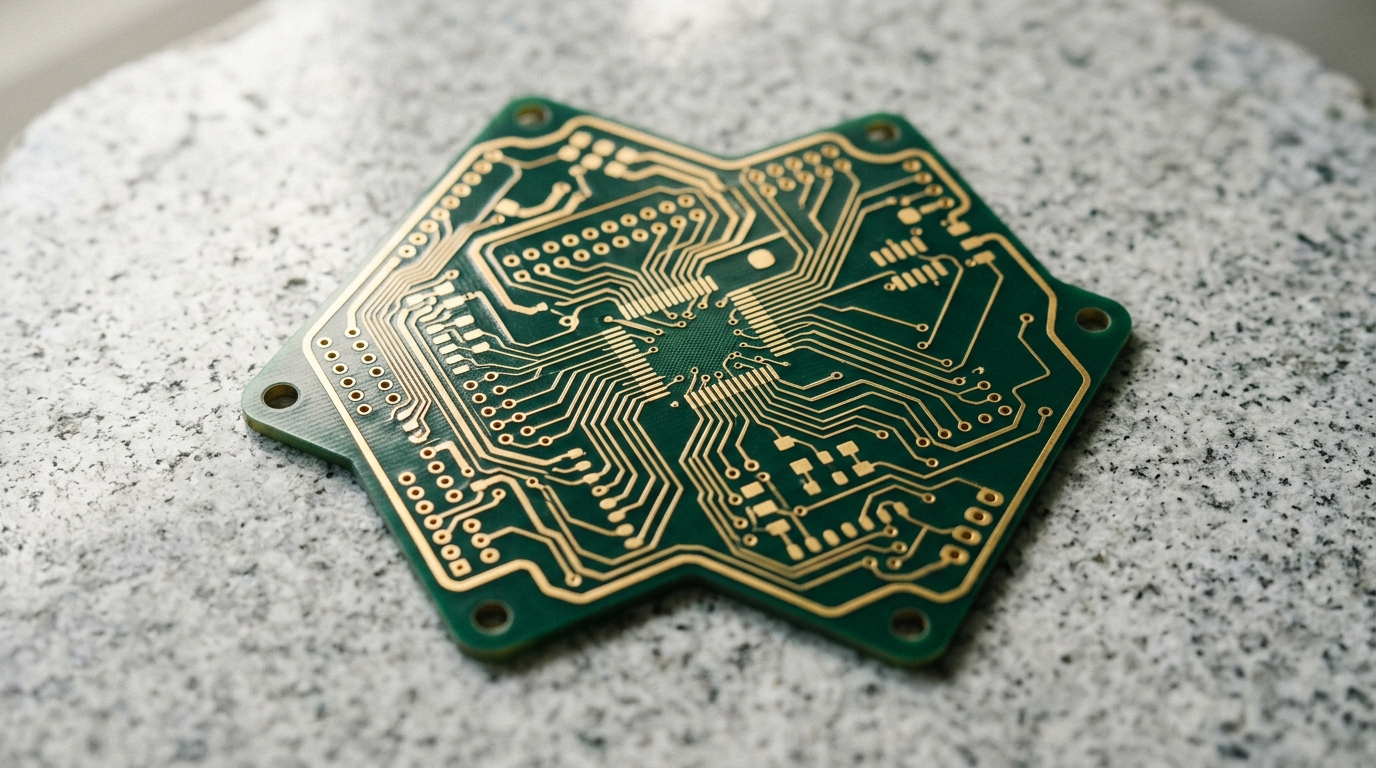
Semiconductors allow engineers to make rectifiers, sensors, transistors, memory and integrated circuits.
They occupy the middle ground between conductors and insulators: conductive enough to carry charge, but controllable enough to make a decision or amplify a signal.
Junctions and devices
Adding different dopants creates p-type and n-type regions. Their boundary forms a junction with useful electrical behavior.
Diodes use junctions to control direction. Transistors use multiple regions or a field-controlled channel. Light-emitting diodes, solar cells and photodetectors convert between electricity and light.
History
The discovery of semiconductor behavior led from crystal detectors to the transistor and integrated circuit. Manufacturing has since become a global discipline involving chemistry, optics, precision machinery, software and enormous clean-room facilities.
Future
New materials such as gallium nitride, silicon carbide and two-dimensional crystals may improve high-power, high-frequency or flexible devices.
The field faces limits in heat, defects, fabrication cost, critical materials and geopolitical concentration. Semiconductor capability is now both an engineering resource and a strategic social dependency.
Ai disclosure: written with the help of AI (ChatGPT). You are encouraged to point out errors and omissions.