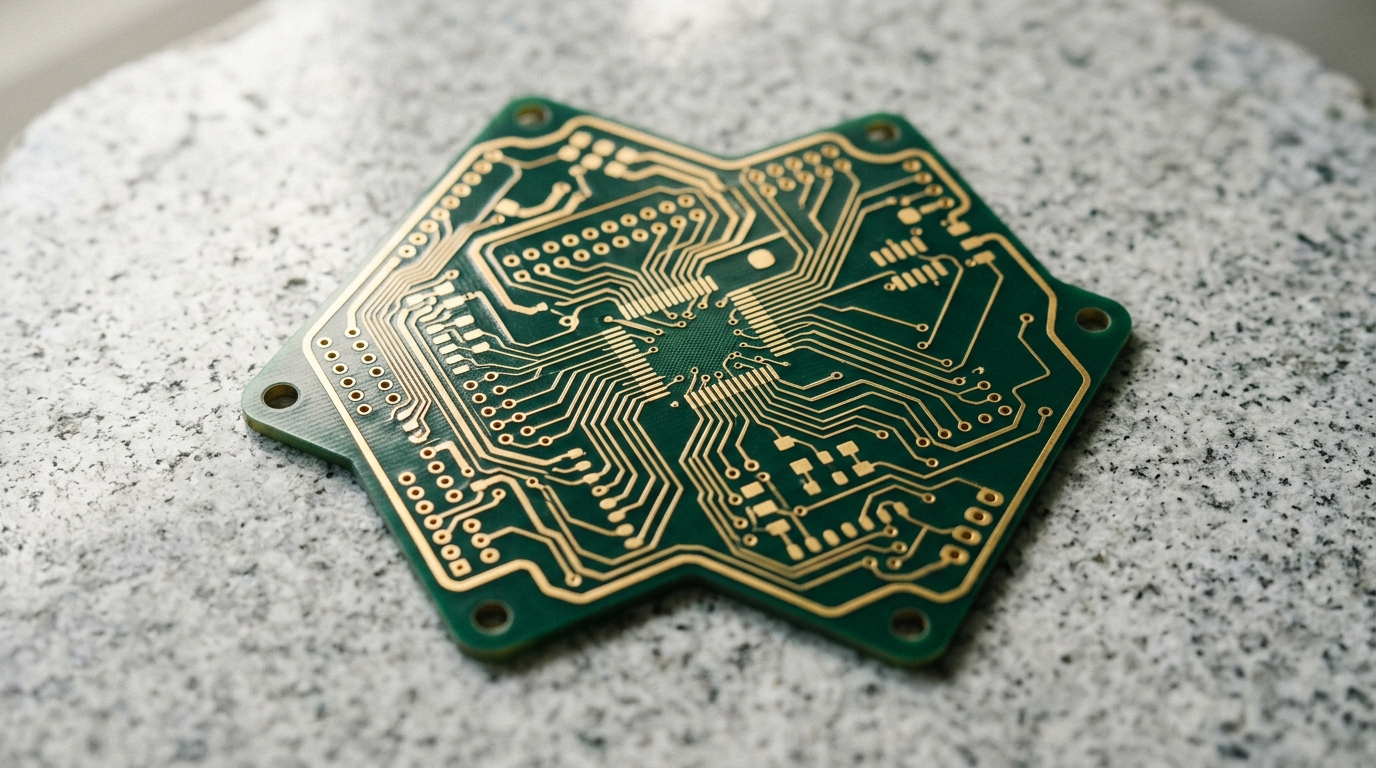





How programmable logic devices implement custom digital hardware after manufacturing.
What is an FPGA?
An FPGA, or field-programmable gate array, is an integrated circuit whose logic and routing can be configured after manufacturing.
It contains lookup tables, registers, memory blocks, clock resources and programmable interconnects.
Why is it useful?
An FPGA can implement parallel pipelines and precise timing without fabricating a custom chip.
It is useful for prototypes, industrial control, signal processing, networking, aerospace and hardware acceleration.
How is it programmed?
Hardware descriptions such as VHDL are synthesized into a configuration bitstream. The device then behaves as the designed circuit until it is reconfigured.
Trade-offs
FPGAs offer flexibility and parallelism, but usually consume more power and area than an optimized ASIC. Timing closure, verification and hardware debugging can be difficult.
Future
FPGAs will increasingly combine processors, high-speed transceivers, AI blocks and adaptive logic. They remain valuable where hardware must be customized but production volume does not justify a new chip.
Ai disclosure: written with the help of AI (ChatGPT). You are encouraged to point out errors and omissions.