


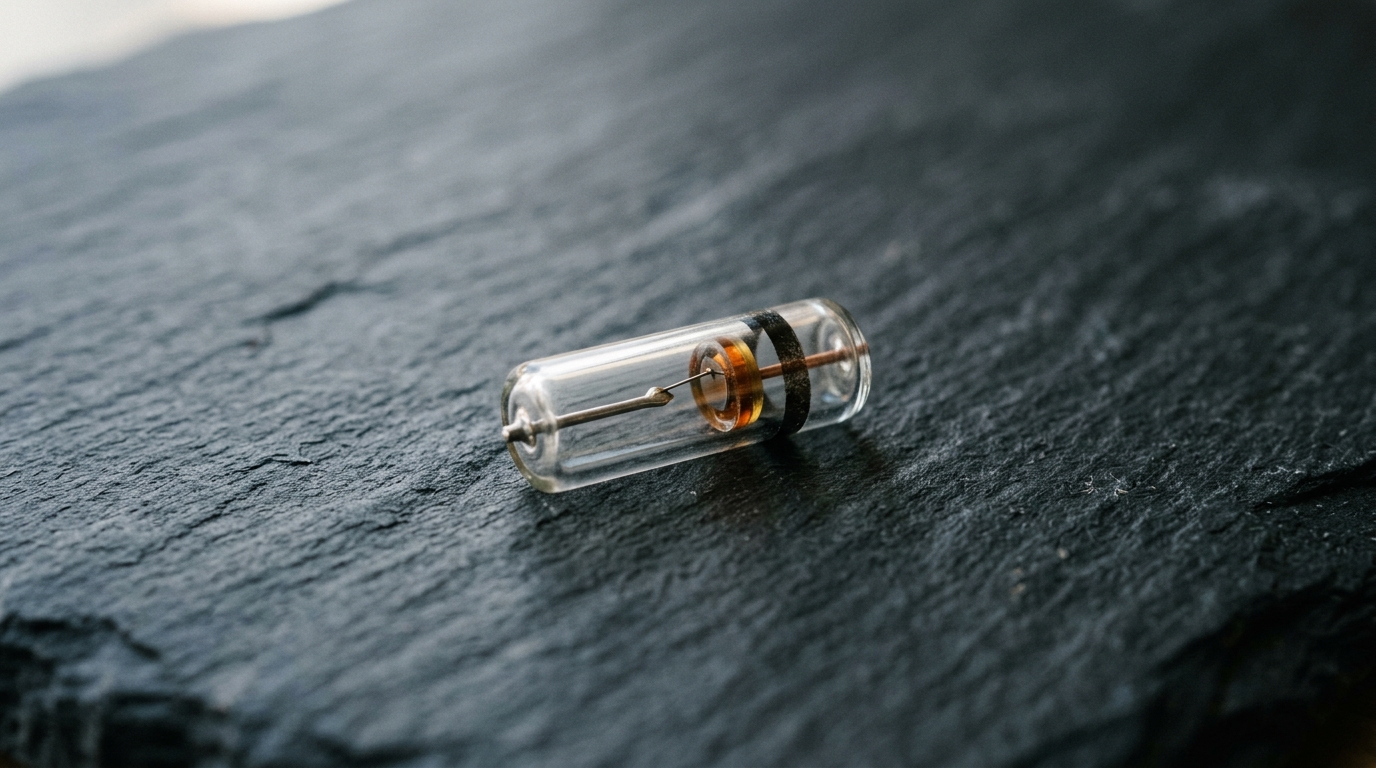
How semiconductor junctions control current direction and convert, protect or sense electrical signals.
What is a diode?
A diode is a two-terminal device with strongly asymmetric current-voltage behavior.
A semiconductor p-n junction is the common basis, though Schottky, light-emitting, photodiode and other types use different structures.
What does it do?
A diode can rectify alternating current, protect against reversed polarity, clamp a voltage, detect a radio signal, emit light or convert light into current.
Forward bias allows substantial current after a characteristic threshold. Reverse bias blocks current until leakage or breakdown becomes important.
Why is it important?
Diodes are simple, fast and robust building blocks. Rectifiers make DC supplies from AC. Zener and avalanche behavior provide references and protection. LEDs made efficient solid-state lighting practical.
Limits and future
A diode is not a perfect switch. It has forward drop, capacitance, recovery time, leakage and heat.
New materials such as silicon carbide and gallium nitride improve high-voltage and high-frequency power conversion. The general idea remains controlled asymmetry in the movement of charge.
Ai disclosure: written with the help of AI (ChatGPT). You are encouraged to point out errors and omissions.