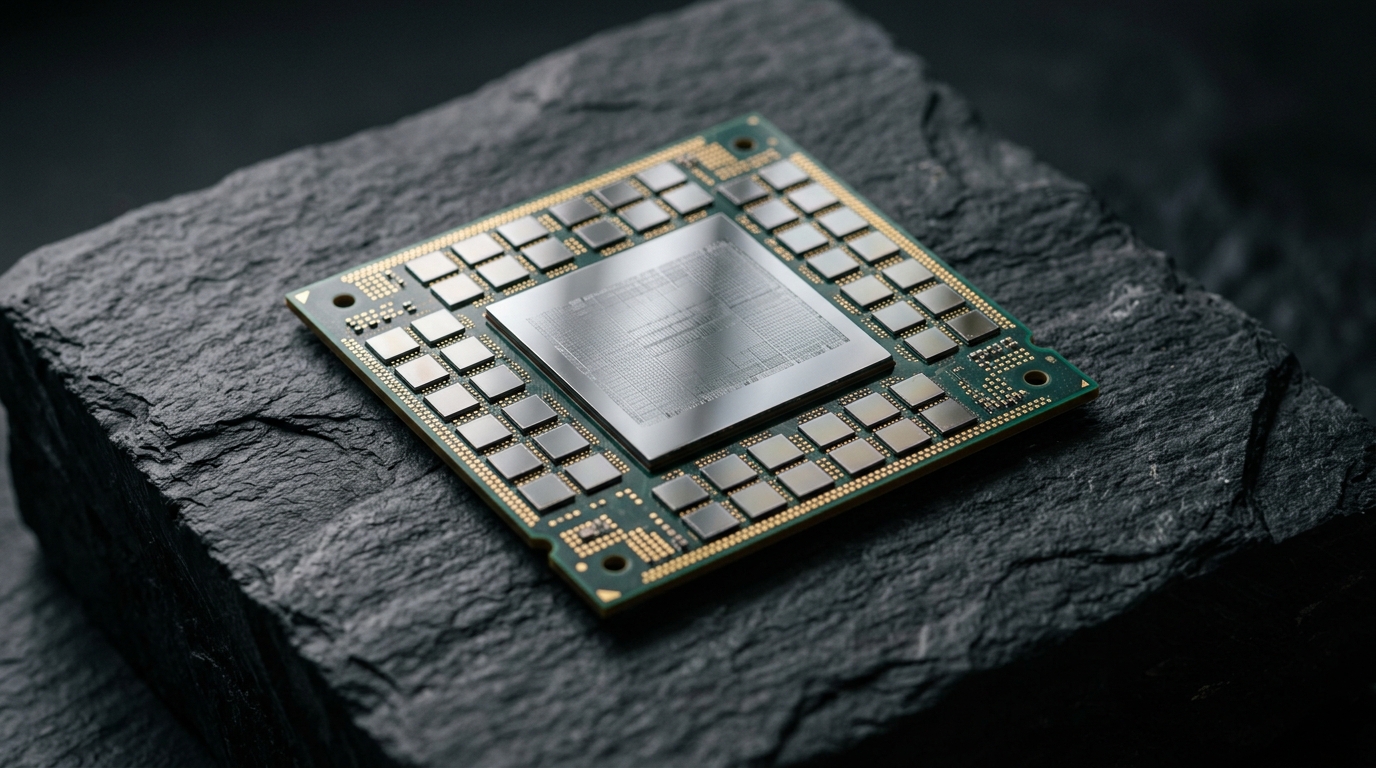





How reduced instruction set computer architectures trade instruction complexity for efficient implementation.
What is RISC?
RISC means reduced instruction set computer. A RISC architecture uses a comparatively small, regular set of instructions designed for efficient decoding and execution.
The name describes a design philosophy, not a single processor or a claim that every program uses fewer instructions.
Common ideas
RISC designs often use fixed-length or regular instruction formats, many registers, load/store memory access and a pipeline-friendly structure.
The compiler translates higher-level operations into sequences of simple instructions.
Why is it important?
Regular instructions can reduce hardware complexity and make timing, verification and energy use more predictable.
RISC ideas influenced processors used in phones, embedded systems, servers and increasingly desktop computers.
RISC and CISC
The boundary is not absolute. Modern RISC processors contain complex optimizations, while CISC processors may translate complex instructions into simpler internal operations.
The useful comparison concerns trade-offs among code density, hardware, performance, power, compatibility and compiler support.
Ai disclosure: written with the help of AI (ChatGPT). You are encouraged to point out errors and omissions.