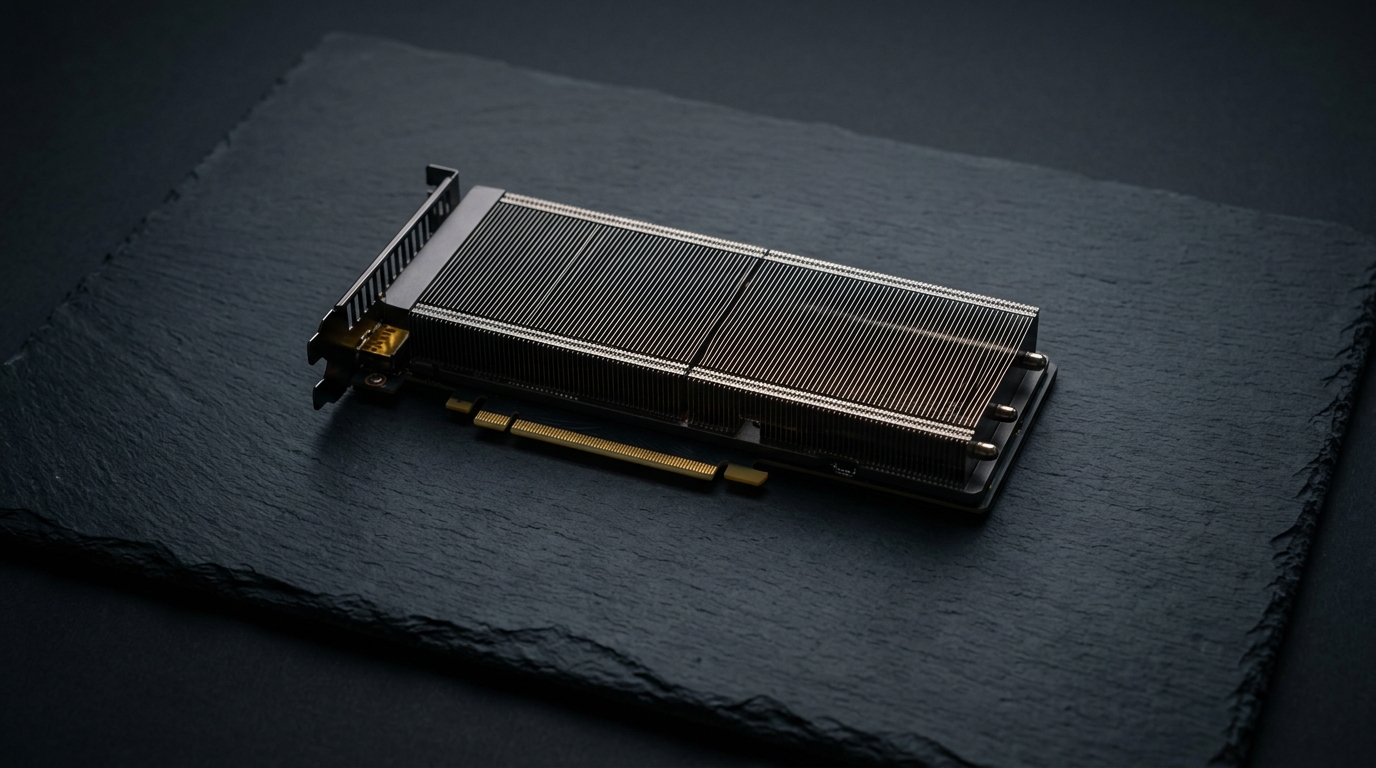




How deep-learning super sampling reconstructs high-resolution images from lower-resolution renders.
What is DLSS?
DLSS, or Deep Learning Super Sampling, is NVIDIA's family of techniques for producing a higher-resolution output from a lower-resolution render.
A game renders fewer pixels, and a trained neural network uses current and previous frames, motion data and other inputs to reconstruct detail.
Why is it useful?
Rendering fewer pixels can increase frame rate while preserving much of the perceived sharpness.
Related techniques can also generate intermediate frames or reduce noise from ray tracing.
What are the limits?
Reconstruction can introduce ghosting, flicker, blur or invented detail when motion vectors, history or scene information are poor.
Results depend on the game, implementation, input resolution, display and hardware.
DLSS is not the same as simply displaying a lower-resolution image, and it is not a guarantee of visual truth.
Future
Machine-learning reconstruction will increasingly be part of real-time rendering. Its value depends on transparent quality evaluation, user control and efficient models rather than a single brand name.
Ai disclosure: written with the help of AI (ChatGPT). You are encouraged to point out errors and omissions.