

user:Belsazar / Wikimedia Commons — CC BY-SA 3.0
Why two paths can produce an interference pattern and challenge classical intuition about light and matter.
What is the double-slit experiment?
In the double-slit experiment, waves passing through two narrow openings produce an interference pattern.
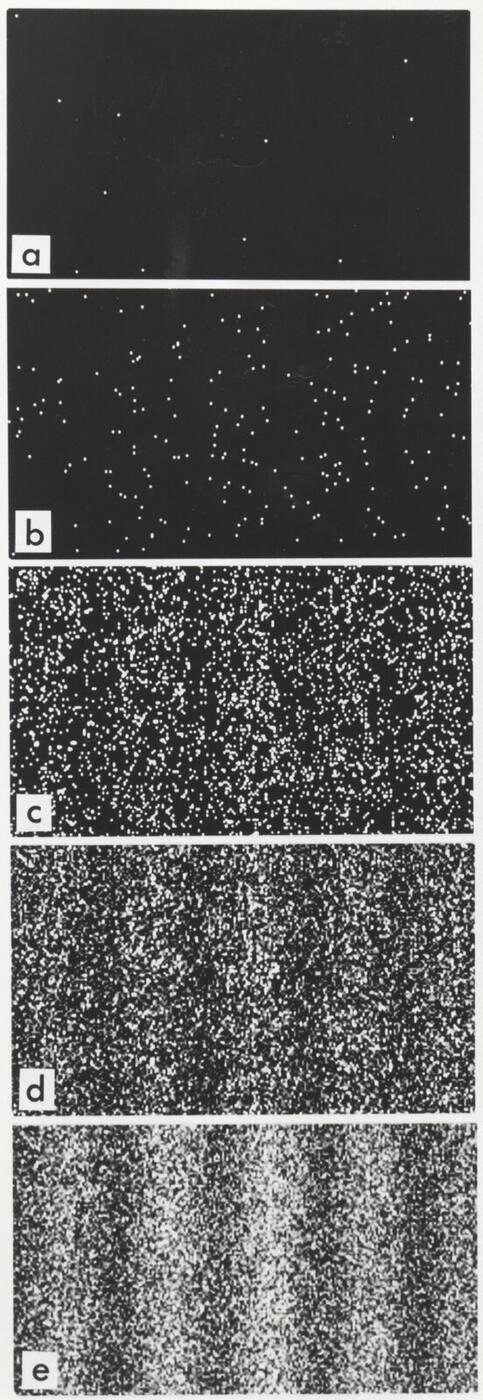
Bright bands occur where the path difference is constructive; dark bands are destructive.
Why is it surprising?
With light, the pattern appears even when particles are sent one at a time, provided many events are accumulated.
When the setup reveals which slit a quantum takes, the interference pattern changes or disappears.
Electrons and other particles can show the same wave-like pattern.
What does it teach?
The result does not mean that a particle is a tiny classical wave. It shows that quantum predictions concern amplitudes and probabilities, and that measurement changes what can be observed.
The experiment is evidence, not a license to claim that consciousness creates reality or that anything is possible.
History and legacy
Thomas Young used the experiment to support wave theories of light. Modern versions test single photons, electrons, atoms and more complex systems.
It remains a simple doorway into interference, measurement and quantum theory.
Ai disclosure: written with the help of AI (ChatGPT). You are encouraged to point out errors and omissions.