



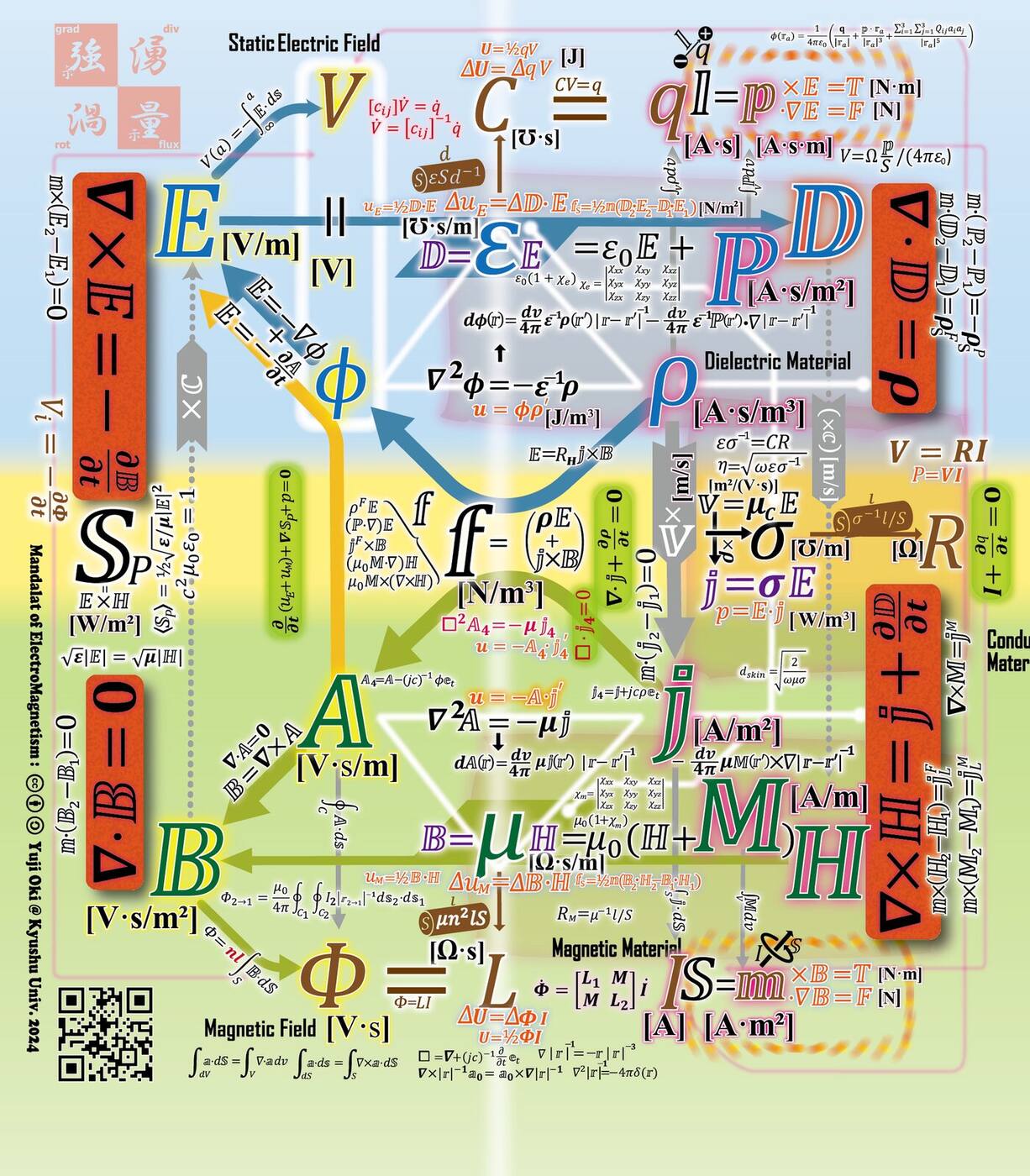
YujiOkiSoptica / Wikimedia Commons — CC BY-SA 4.0
The four equations that describe how electric and magnetic fields are produced and evolve.
What are Maxwell's equations?
Maxwell's equations are the classical laws of electromagnetism. In differential form they can be written as:
- Gauss's law for electricity: ∇ · E = ρ/ε₀
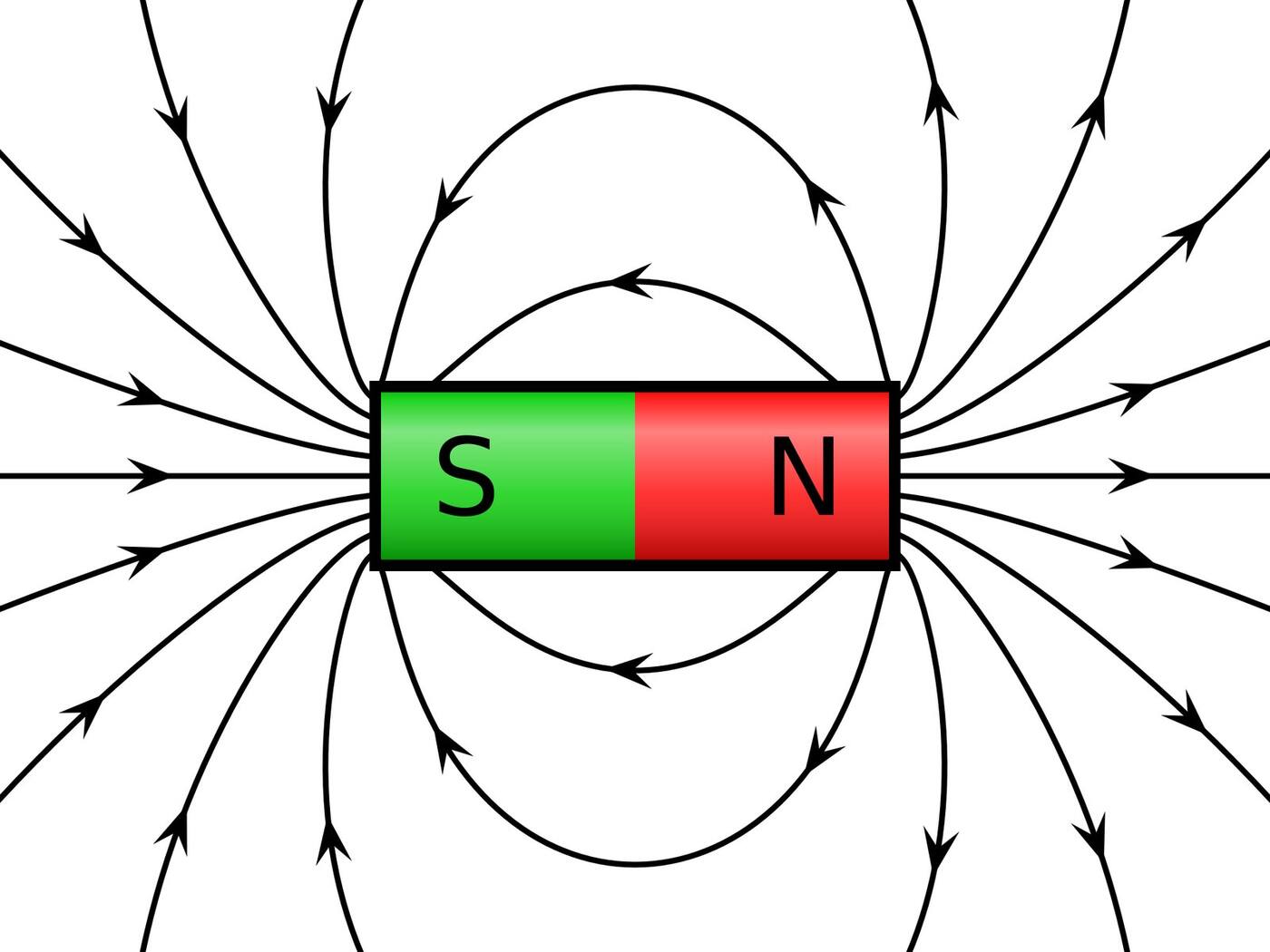
- Gauss's law for magnetism: ∇ · B = 0
- Faraday's law: ∇ × E = −∂B/∂t
- Ampère–Maxwell law: ∇ × B = μ₀J + μ₀ε₀∂E/∂t
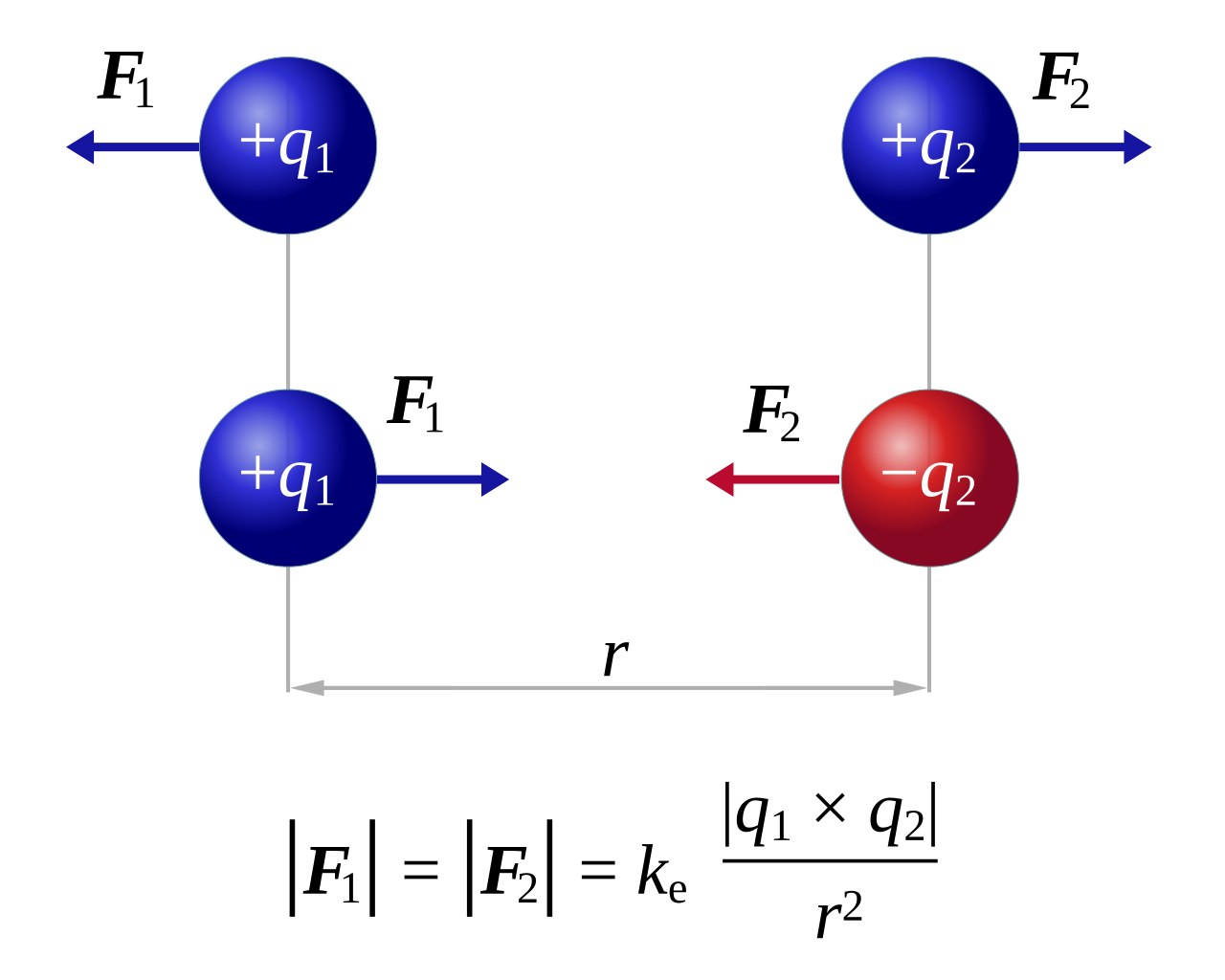
They describe how charge and current create fields and how changing fields create one another.
What do they predict?
Together with material laws and boundary conditions, the equations predict electrostatic forces, induction, circuit behavior, wave propagation, reflection, refraction and radiation.
They imply that light is an electromagnetic wave.
Why are they important?
They provide one framework for power systems, motors, antennas, radio, optics, imaging and electromagnetic compatibility.
Circuit laws are often useful approximations to the more general field description.
Limits
Maxwell's equations are classical. At atomic scales, quantum electrodynamics is needed to describe matter and light more completely.
The equations remain indispensable because many practical systems operate accurately in the classical regime.
Ai disclosure: written with the help of AI (ChatGPT). You are encouraged to point out errors and omissions.