


Omegatron / Wikimedia Commons — CC BY-SA 3.0
How a system stores charge per unit voltage and why geometry and materials matter.
What is capacitance?
Capacitance is the ratio of stored charge to voltage: C = Q/V.
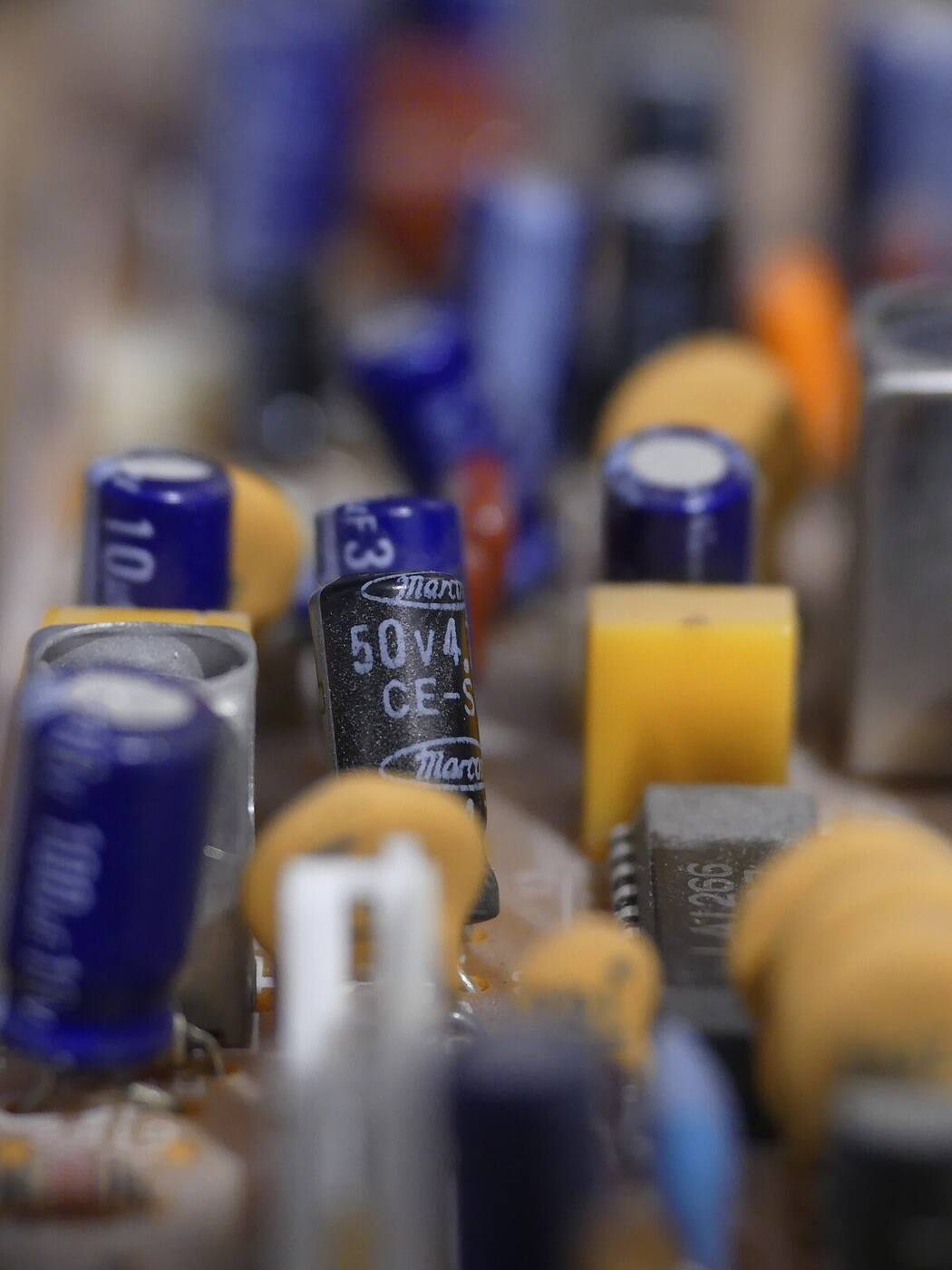
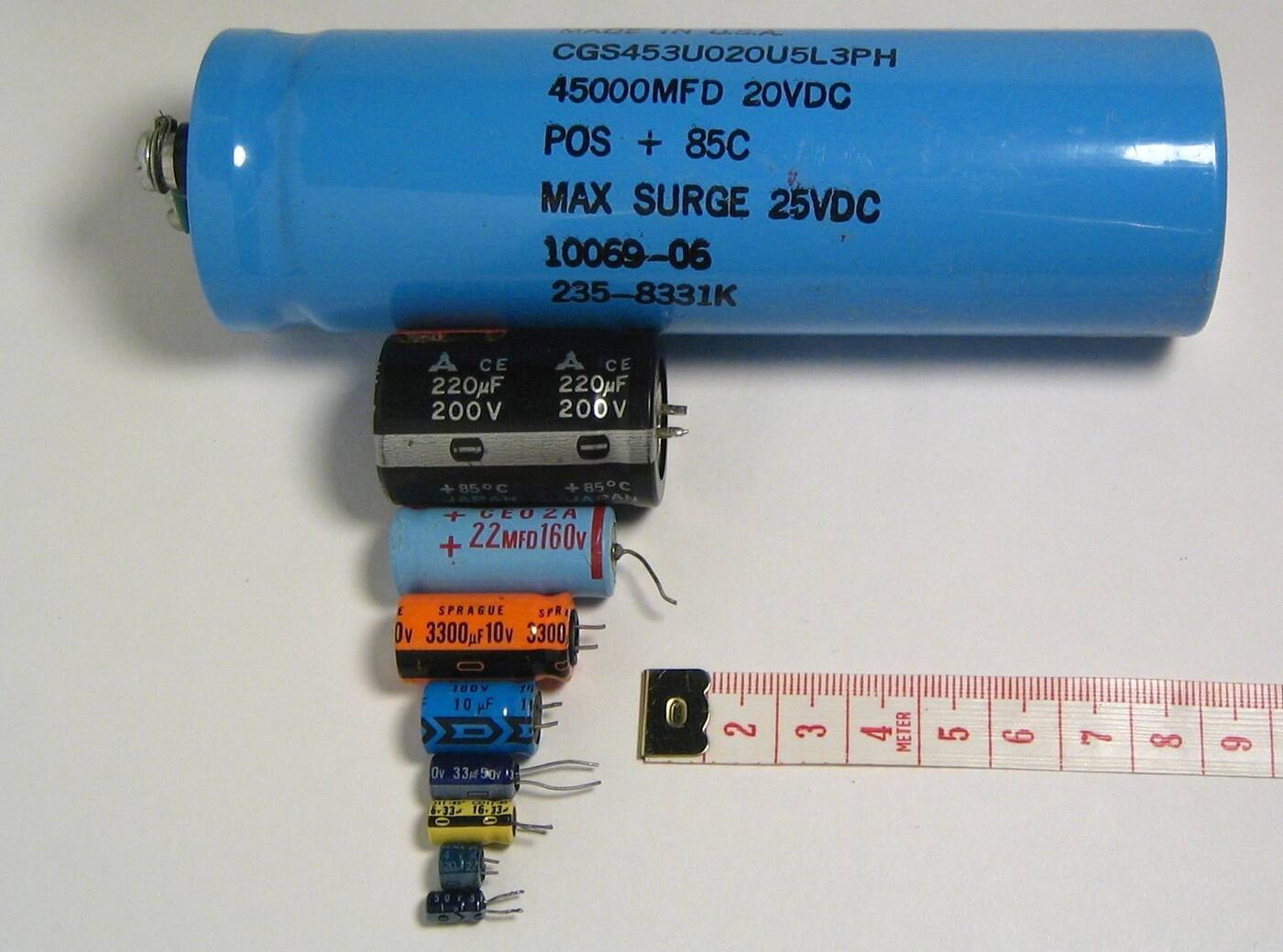
It is measured in farads. A capacitor has capacitance, but stray capacitance also exists between wires, circuit layers and nearby objects.
What determines it?
For a simple parallel-plate structure, capacitance increases with plate area and dielectric permittivity, and decreases with separation.
Real geometry, frequency, temperature, leakage and dielectric loss affect the effective value.
Why is it important?
Capacitance determines charging time, filter behavior, resonant frequency, signal coupling, memory of analog values and transient energy delivery.
Together with resistance it creates a time scale τ = R C. Together with inductance it can create oscillation.
Future
Smaller geometries make parasitic capacitance increasingly important in fast circuits. New dielectrics and supercapacitors broaden the range of useful energy storage.
Ai disclosure: written with the help of AI (ChatGPT). You are encouraged to point out errors and omissions.