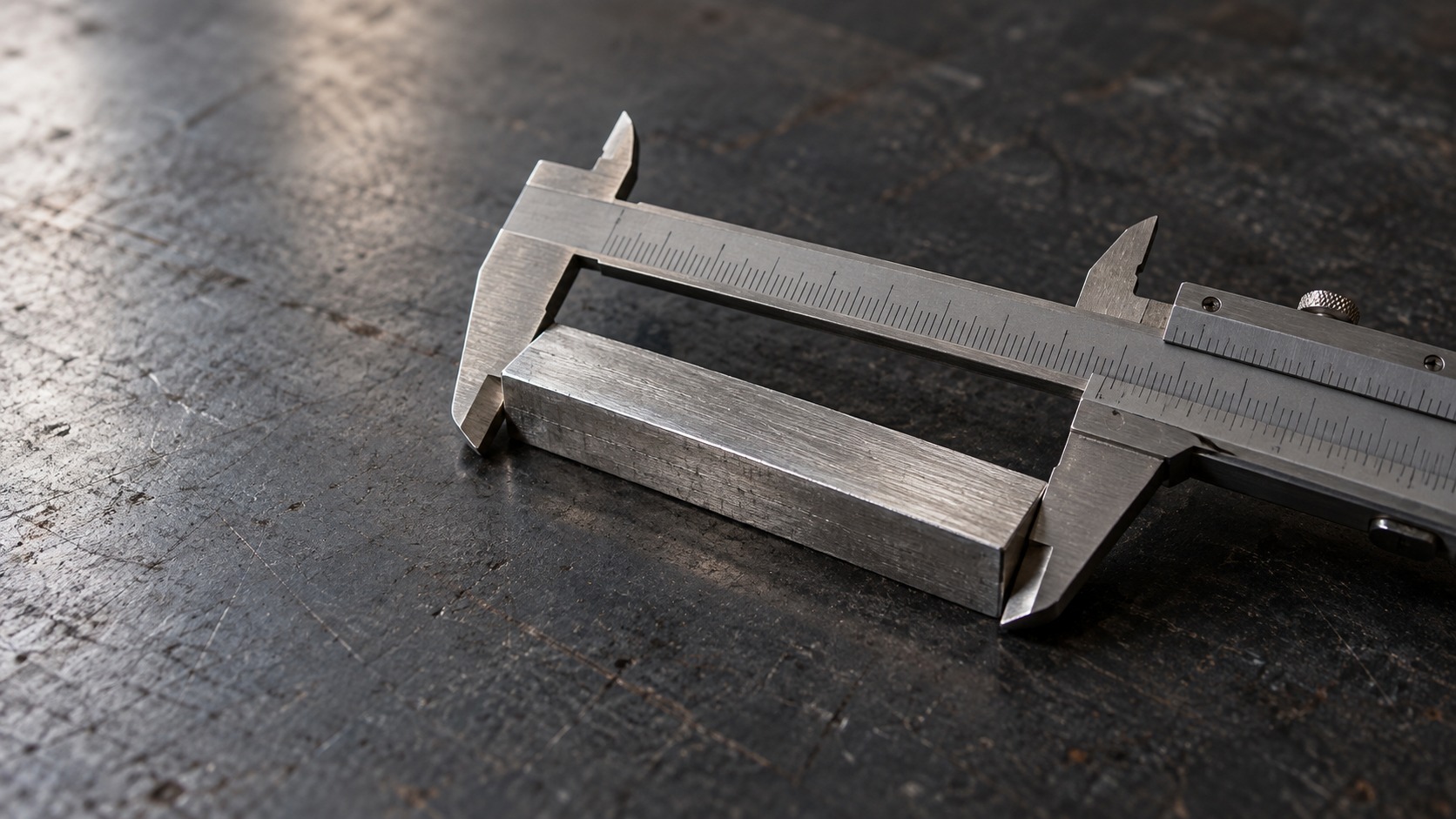




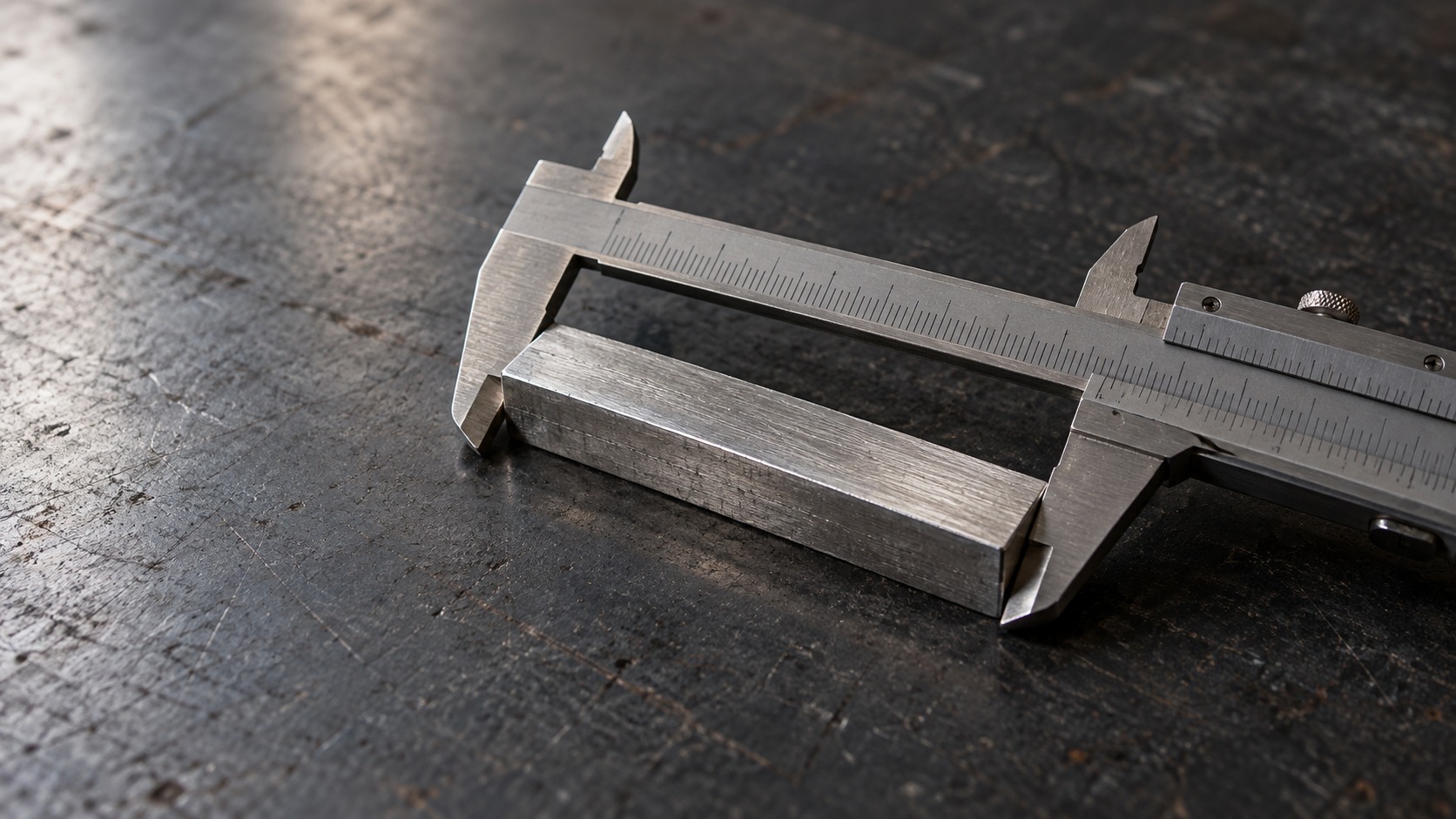
OpenAI image generation / AI-generated
How significant digits, decimal places, exact conversions and uncertainty determine the appropriate way to report a measurement.
What are significant figures?
Significant figures, also called significant digits, are the digits retained to communicate the numerical detail of a value.
For measured values, they should be consistent with the available measurement information. They do not, by themselves, specify an uncertainty, guarantee accuracy or establish repeatability.
For example, 5.010001 cm contains seven significant figures and six decimal places. Its written form alone does not establish that the length is known to the last displayed digit.
How are significant figures counted?
| Written value | Significant figures | Decimal places |
| 5.01 cm | 3 | 2 |
| 5.010 cm | 4 | 3 |
| 0.005010 m | 4 | 6 |
| 50.100 mm | 5 | 3 |
| 5.010001 cm | 7 | 6 |
Non-zero digits count. Zeros between significant digits count. Leading zeros locate the decimal point and do not count. Trailing zeros after a decimal point indicate retained significant figures.
Trailing zeros in a whole number can be ambiguous without context. Scientific notation makes the intended representation explicit: 5 × 10¹ mm has one significant figure; 5.000 × 10¹ mm has four. Purdue: significant figures.
How do significant figures differ from decimal places?
Decimal places count digits after the decimal point. Significant figures count retained digits beginning with the first non-zero digit.
The same measured length can be written as:
5.0100 cm = 50.100 mm = 0.050100 m.
All three forms retain five significant figures. Their decimal places differ because their units differ.
An exact unit conversion changes the numerical scale without adding measurement information. The factor 10 mm per centimetre is exact.
Are design dimensions limited by significant figures?
A design dimension is a requirement rather than a measurement.
Writing a target as “5 cm” does not, by itself, establish a ±0.5 cm tolerance or restrict the design to one significant figure. Drawings may use explicit tolerances, general tolerance notes or documented conventions.
For an unambiguous requirement, write the nominal dimension and its limits, such as 50.00 ± 0.10 mm, and state the applicable reference conditions where needed.
Exact counts and defined conversion factors also differ from measured values. The count of two identified pieces is exact; their measured lengths have uncertainty.
Does the last digit give the uncertainty?
No. The last digit identifies a reporting increment, not the full measurement uncertainty.
A value rounded to the nearest 0.01 mm has a rounding difference of at most 0.005 mm relative to its unrounded numerical value. This is a statement about rounding. It is not a bound on the difference between the measured value and the true length.
Calibration uncertainty, noise, environmental effects and other contributions may be larger than the reporting increment.
Likewise, printing 5.010001 cm uses a last-place increment of 0.000001 cm = 0.00001 mm = 10 nm. The printed digits alone cannot substantiate that level of measurement performance.
How should measured values be rounded?
Retain sufficient digits during calculations. Round the final result to a level consistent with its evaluated uncertainty.
A common practice is to report uncertainty with one or two significant figures and round the result to the same decimal position. Requirements of a particular method or application take precedence. GUM: reporting uncertainty, section 7.2.6.
For example, suppose a separate measurement evaluation gives an unrounded estimate of 50.100035 mm and expanded uncertainty of 0.01236 mm.
With the uncertainty rounded to two significant figures, the report becomes:
Length = (50.100 ± 0.012) mm.
The value and uncertainty both end at the 0.001 mm position. The coverage factor and coverage basis must also be stated. This is a reporting illustration, not an uncertainty calculated from two cut-piece readings.
What happens when the discarded digit is 5?
The rounding convention should be stated when it matters.
With round to nearest, ties to even, an exact halfway value is rounded so the final retained digit is even:
| Input | To two decimal places |
| 5.014 | 5.01 |
| 5.016 | 5.02 |
| 5.025, exactly | 5.02 |
| 5.035, exactly | 5.04 |
| 5.0251 | 5.03 |
The ties-to-even rule applies only at an exact halfway point. For the positive numbers shown here, a value greater than the halfway point rounds to the higher of the two neighbouring values.
Some procedures require a different convention, including rounding uncertainties upwards. Use the applicable procedure consistently. NIST: rounding expanded uncertainties and calibration values.
What about calculations with measured values?
Elementary significant-figure rules provide rough reporting guidance:
- Addition and subtraction: the coarsest decimal position commonly limits the reported result.
- Multiplication and division: the smallest significant-figure count commonly limits the reported result.
- Exact counts and exact conversion factors: these do not limit measurement significant figures.
These shortcuts do not replace uncertainty propagation. They can be inadequate when quantities are correlated, errors cancel in a difference or an average is calculated from repeated observations.
An average may legitimately be reported more finely than a single observation when the measurement analysis supports it. The added digits must follow from that analysis, rather than from the calculator's display.
What follows?
Use digits to communicate supported numerical detail. Preserve useful working digits, apply exact unit conversions correctly, and round the reported result in accordance with its uncertainty.
Where can I read more?
Measurement, resolution and uncertainty explains the information behind a reported value. Accuracy, precision and tolerance distinguishes agreement with a reference from consistency between results.
Ai disclosure: written with the help of AI (ChatGPT). You are encouraged to point out errors and omissions.