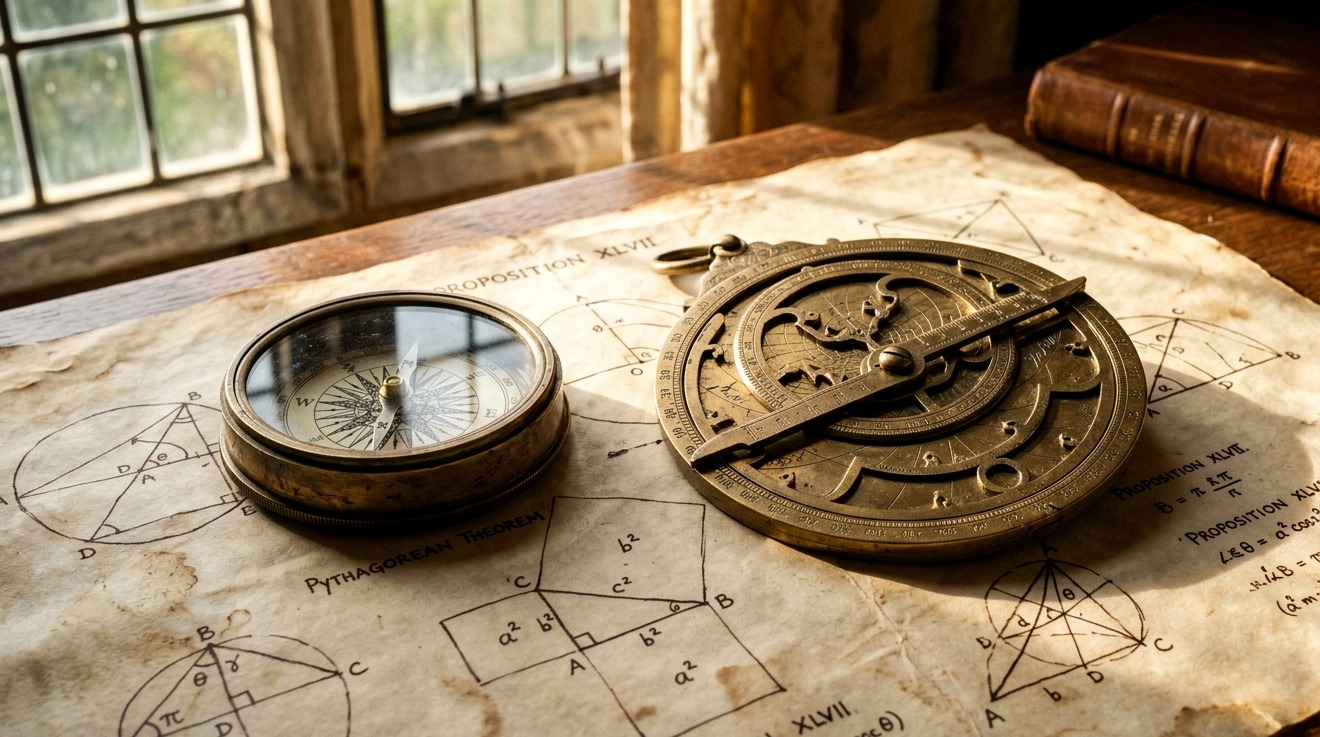
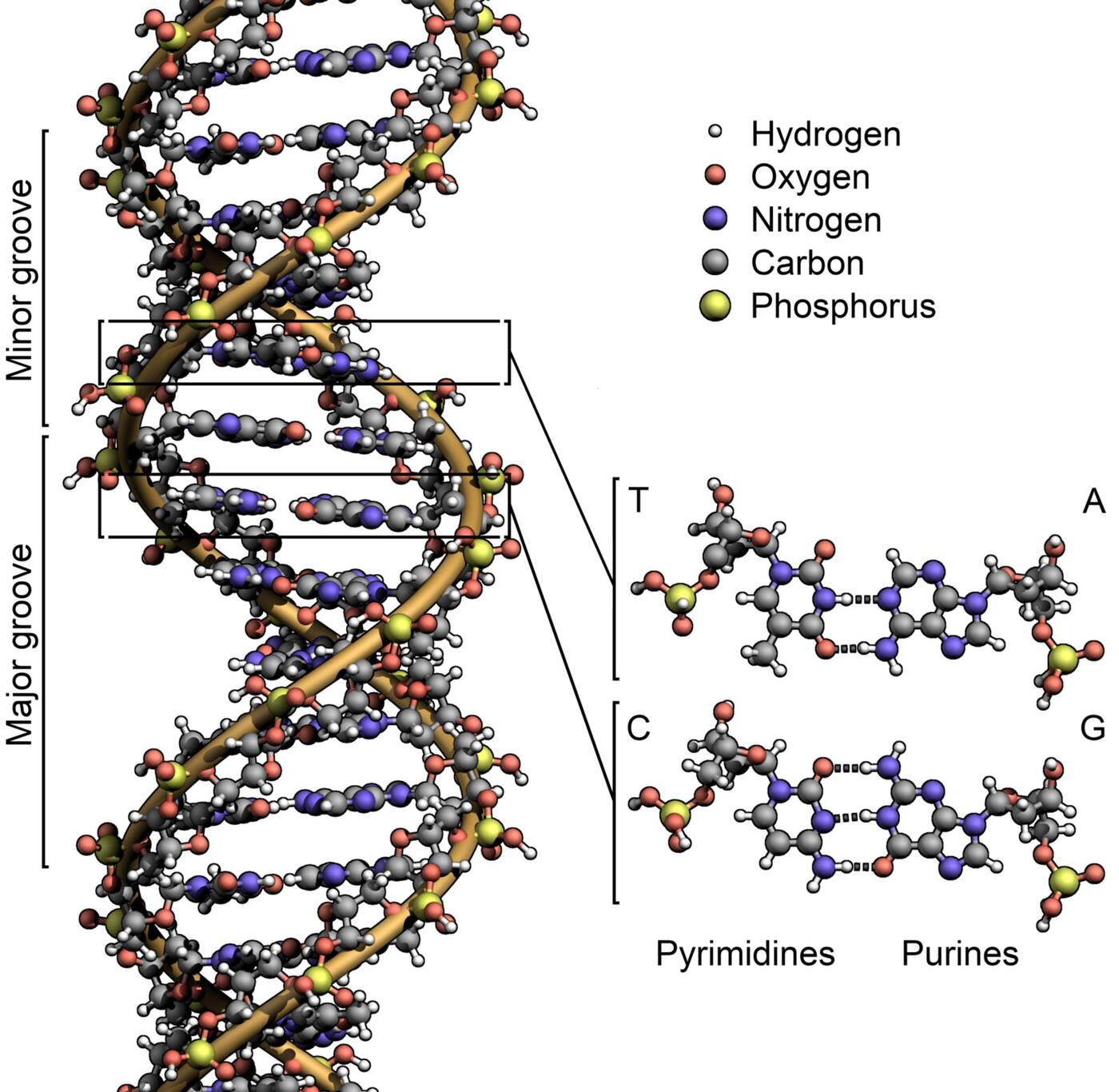



The abstract study of number, quantity, space and patterns, built on definitions, axioms and deductive proof.
What is mathematics?
Mathematics is the study of numbers, structures, shapes and patterns through logical reasoning. Unlike the natural sciences, which test ideas against physical observations, mathematics begins with precise definitions and a small set of starting assumptions (axioms), deriving truths that follow with deductive certainty.
How does it work?
Mathematical knowledge is cumulative. Once a statement is proven from accepted axioms, it becomes a permanent theorem. Future mathematicians do not need to re-prove it; they can cite it directly as a stepping stone to explore further. This unbroken chain of proof allows mathematics to build vast and intricate structures of verified knowledge.
Why does it matter?
Mathematics provides the universal language for all rigorous thinking. Physics uses calculus to describe planetary orbits and quantum fields, computer science relies on discrete logic and boolean algebra to process information, and cryptography uses number theory to secure global communications.
Topics
- Axioms — The starting assumptions accepted without proof that define the rules of a mathematical system.
- Proof — How rigorous deduction establishes permanent truths, where one proof builds on another.
- Multiplication — How repeated addition expands into rectangular grids, area, and continuous scaling.
- Zero — Why zero represents the absence of quantity, serves as an identity, and carries no unit.
- Division by Zero — Why dividing by zero is undefined in arithmetic and what happens when approaching the boundary.
Ai disclosure: written with the help of AI (ChatGPT). You are encouraged to point out errors and omissions.