
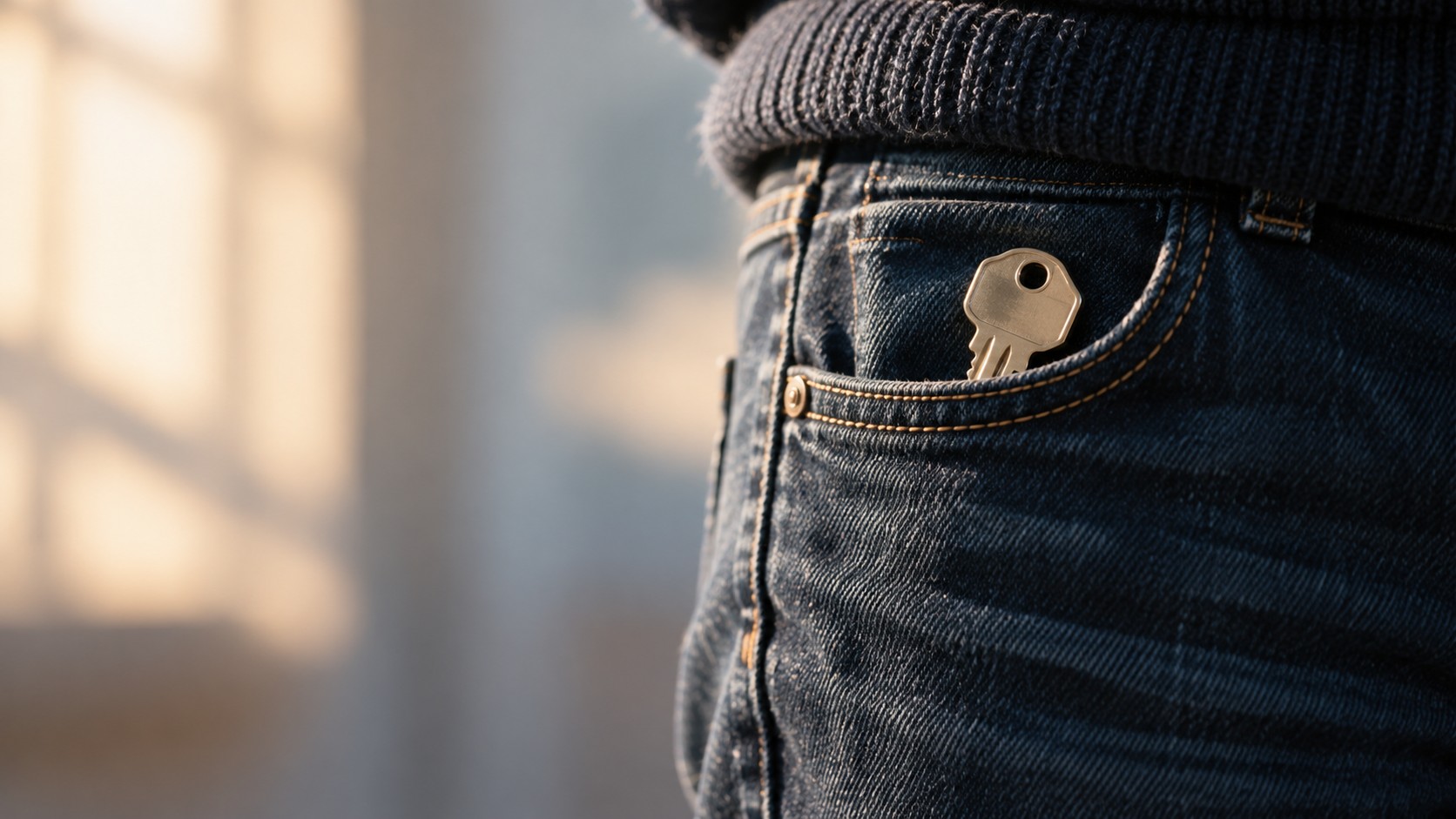
OpenAI image generation / AI-generated
What Murphy’s law can teach us about everyday safety: anticipate mistakes, remove avoidable risks, and protect the people we love.
Before starting an ordinary task, there is one question worth asking:
If something goes wrong, will everyone still be safe?
On October 30, 2026, a father and his 11-year-old son died after falling from the 23rd-floor balcony of their home in Greater Noida West, near Delhi. Reports citing police said they had been plucking flowers for prayers. Early accounts differ on some details, including the use of a ladder, but describe the boy losing his balance and his father falling while trying to save him. The investigation was continuing at the time of those reports. The Indian Express, The New Indian Express
There is a grieving family behind those few sentences. We should resist the temptation to judge people whose final moments we did not witness. From the safety of our own homes, with the outcome already known, danger can look far more obvious than it did beforehand.
But we can respond to this loss by looking carefully at the ordinary moments in our own lives.
A flower just beyond reach. A light that needs changing. A decoration to hang. A small repair before leaving for work.
The task feels small. That can make the danger feel small, too.
They are different things.
What does Murphy’s law mean?
Murphy’s law is commonly expressed as: “Anything that can go wrong will go wrong.”
Taken literally, that is an exaggeration. It is not a scientific law, and it does not mean disaster is inevitable. Its value is as a reminder: allow for failure before failure happens.
A foot can slip. A hand can lose its grip. A ladder can shift. Someone can misunderstand an instruction. A person who is usually steady can have one unsteady moment.
A safe arrangement must leave room for that.
A lesson I learned from my house key
I learned a small version of this lesson through my house key. While visiting different batchmates’ homes, I kept taking it out and leaving it behind. I would discover my mistake late at night, when I needed to get into my own home.
After this happened repeatedly, I changed one habit: I stopped taking the key out during those visits. By keeping it in my pocket, I removed the step that allowed me to leave it lying somewhere.
The stakes were modest, but the lesson stayed with me. Instead of asking myself to remember better every time, I changed what I did so there was less to remember.
The same question can help us with much more serious risks: Can I remove the opportunity for this mistake to happen?
A small task can carry a serious risk
Think about the difference between dropping a cup over a kitchen counter and dropping it over a balcony. The same small mistake has very different consequences. When we judge a task, we need to consider both how likely a mistake is and what that mistake could cost.
“It will only take a second” tells us how long the task might take. It tells us nothing about how safe it is.
“I have done it before” tells us about previous attempts. It cannot guarantee the next one.
And “I’ll be careful” is a promise made by a human being. Human beings get tired, distracted, startled and rushed. We need precautions that still protect us when our attention briefly fails.
Three questions before you begin
Before an unfamiliar or potentially dangerous task, pause long enough to ask:
- What could realistically go wrong? Could I slip, overreach, lose my grip or move something unexpectedly?
- What would happen then? Would I have a minor mishap, or could someone suffer a life-changing injury?
- Can I change the task so that an ordinary mistake does not become a catastrophe?
That third question is where prevention becomes practical.
At home, it might mean leaving an unreachable flower where it is. Moving a plant so it can be tended from the floor. Postponing a decoration. Asking a suitably equipped professional to handle work at height.
Around balconies, keep furniture and other climbable objects away from railings, and supervise young children. Children’s safety guidance specifically recommends these measures because objects near a barrier can become a way over it. Sydney Children’s Hospitals Network
For tasks that require a ladder, suitable equipment, secure positioning and avoiding overreaching matter. Where possible, avoid working at height altogether. A ladder adds reach; it does not, by itself, make the surrounding situation safe. UK Health and Safety Executive, ladder safety guidance
Make it easier to stop
A child should be able to say, “I’m scared,” without being called timid. An adult should be able to say, “This doesn’t feel safe,” without embarrassment. A worker should be able to raise a concern without being pressured to hurry.
When someone hesitates, listen. Their hesitation may be the moment that allows everyone to reconsider.
Parents can teach children a sentence they can carry into adulthood:
“You can always stop and ask for help.”
Adults need permission to use that sentence, too.
The reported attempt by a father to save his son is especially painful. Reaching for a child in danger is an instinct many parents will recognise. We should be very cautious about judging that response from a distance.
It also reminds us why prevention matters so much. Once an emergency begins, there may be almost no time to think. The opportunity to protect everyone often comes earlier—while arranging the space, choosing the equipment or deciding whether the task needs doing at all.
Learning from an accident does not require us to believe we are wiser than the people involved. It requires us to accept that we share their human vulnerability.
We, too, have hurried. We have stretched a little farther. We have trusted something because it held last time.
Murphy’s law asks us to account for that vulnerability.
We cannot prevent every tragedy. We can make more of our everyday arrangements forgiving of a mistake. We can choose a safer method, accept a delay, leave something unfinished and take another person’s concern seriously.
The next time you hear yourself say, “Just hold this,” “Just climb up,” or “Just a little farther,” pause.
Ask:
If something goes wrong, will everyone still be safe?
If the answer is no, change the plan.
The task can wait. The person matters.
Ai disclosure: written with the help of AI (ChatGPT). You are encouraged to point out errors and omissions.