


Examining ritual bali, the tension between metaphysical oneness and physical survival, and why confronting evil requires retaining the capacity for force.
What is animal sacrifice?
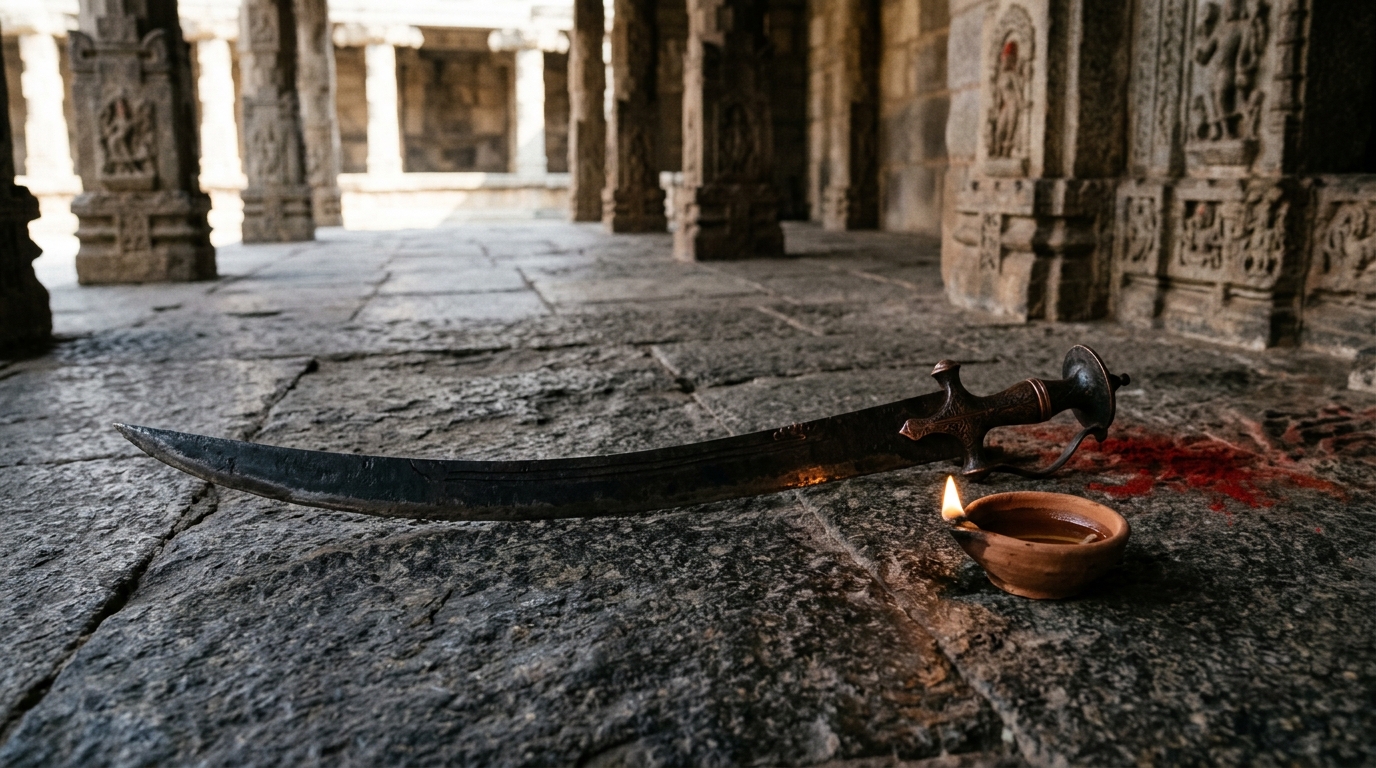
Animal sacrifice (bali) is the ritual offering of an animal's life to a deity. In Hindu traditions, particularly within Shakta practice, it is not an act of wanton slaughter or cruelty. It is a consecrated act performed before the Divine Mother—most notably during Durga Puja or Kali Puja—where the blood and life of the offering are presented to the Goddess, and the meat is distributed as prasad.
For many modern observers, the ritual appears shocking. About seven years ago, I shared that discomfort. I was collecting signatures on petitions to stop animal sacrifice in temples. I saw it purely through the lens of modern urban sensibilities: unnecessary violence inflicted upon innocent creatures.
Yet years later, despite being a strict vegetarian, I stepped into the sacrificial enclosure during Durga Puja and personally dispatched ten goats.
I did not do it to boast or to perform bravado. I did it because, after years of study and reflection, it appeared as the logical, necessary conclusion of a philosophy that does not run away from the darker realities of existence.
The symbolic interpretation
The most common modern critique of bali is that it was originally symbolic and later corrupted.
A prominent line of argument—often influenced by New Age philosophies such as The Law of One (the Ra material) or allegorical readings of Vedanta—proposes that:
- The animal represents internal vices: the goat or buffalo represents our animalistic tendencies—lust, anger, greed, ego, and base appetite. To "sacrifice" the animal means to overcome these flaws within ourselves.
- Divine beings reject violence: higher spiritual consciousness is assumed to be purely compassionate. Therefore, a divine command could never instruct the physical killing of a creature.
- The ritual is a corruption: from this viewpoint, literal blood sacrifice arose because human beings with coarser consciousness mistook an internal spiritual metaphor for an external physical instruction, or were misled by lower, negatively oriented entities.
This interpretation is clean and comforting. It fits neatly into a modern spiritual framework where spiritual advancement is equated solely with gentle nonviolence (ahimsa).
However, it misreads both history and the philosophy of the ritual.
Metaphysical unity and the problem of survival
Advaita Vedanta teaches that all existence is one: Brahman. At an ultimate level, there is no fundamental boundary between the self, the animal, the tree, and the stone. I feel that connection deeply.
Yet we do not live solely in the unmanifest absolute; we live in the manifest world. In this physical plane, existence has an unavoidable condition: life sustains itself only by consuming life.
Suicide is not a moral answer. To exist in a physical body means that microorganisms die when you breathe, plants die when you eat, and habitats are cleared when you build a shelter. Even as a vegetarian, my survival entails ending other forms of life.
If one argues from pure metaphysical oneness that no life may ever be ended, one must explain why taking plant life is permissible while taking animal life is unacceptable. Both are expressions of the one underlying reality. The difference is one of sentience and nervous complexity, not of metaphysical essence.
Nonduality does not eliminate duty, conflict, or the material laws of nature. It places them in context.
Why the warrior must remain
The central flaw of treating nonviolence as an absolute dogma is the assumption that everyone will evolve simultaneously.
They will not.
In the language of The Law of One, there are entities and consciousnesses that operate strictly on a "service-to-self" orientation—driven by domination, conquest, control, and subjugation. In ordinary terms, the world contains predators, tyrants, and terrorists like Ajmal Kasab.
If a society renounces all capacity for lethal force and internalises the belief that any act of violence is spiritual degradation, it does not create universal peace. It merely turns itself into cattle. And cattle are inevitably subjugated, exploited, and slaughtered by those who retain their claws.
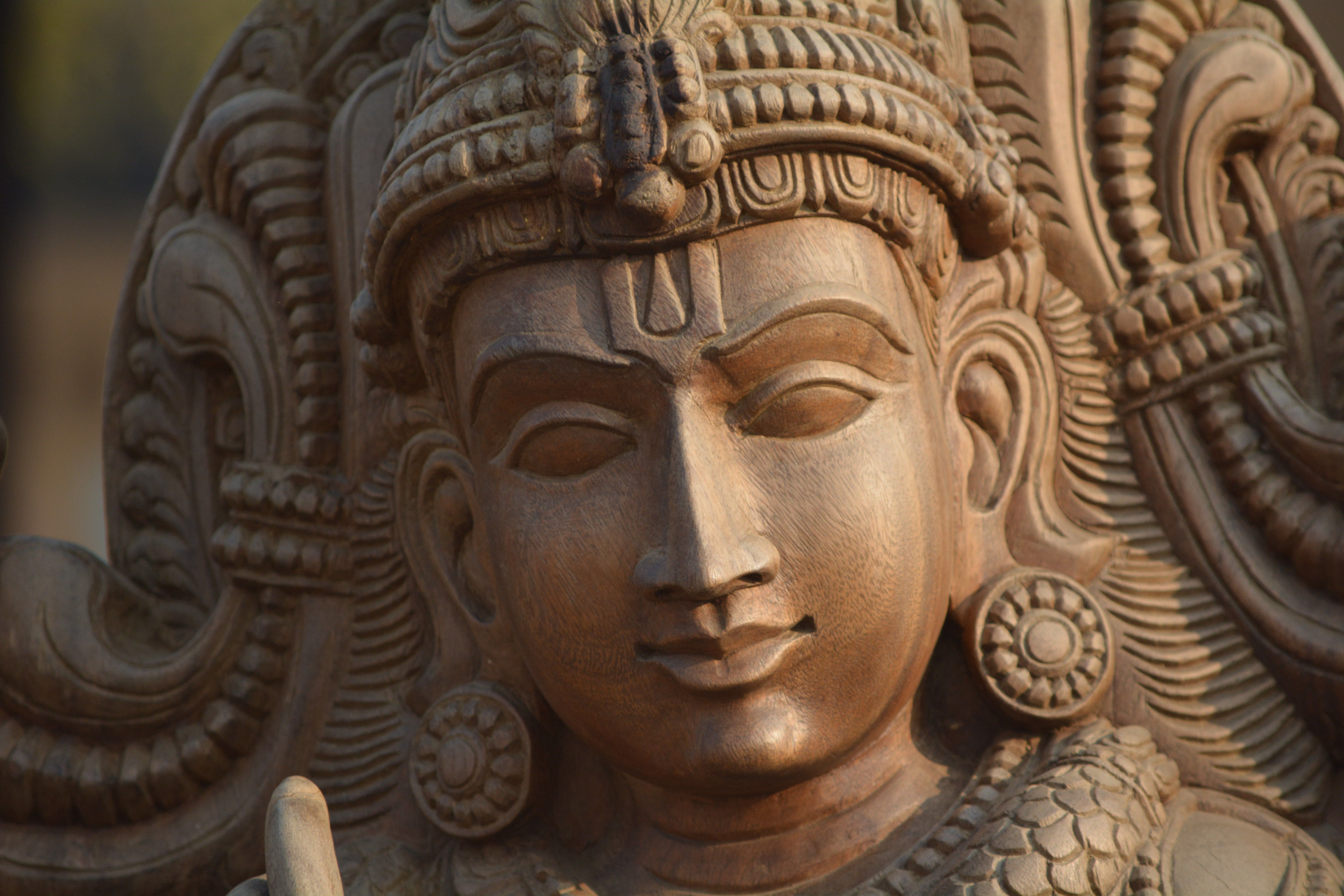
Durga does not carry lotus flowers in all ten hands. She holds a trident, a sword, a disc, a bow, and an axe. She is Mahishasuramardini—the slayer of the buffalo demon Mahishasura.
The ritual of bali is an overt physical reminder of this truth:
- The demon must be destroyed.
- The capacity to wield a blade, sever life, and confront blood cannot be outsourced or forgotten.
- Compassion without the strength to defend it is merely helplessness masquerading as virtue.
When an animal is sacrificed before the Goddess, the participant is forced to look death directly in the face. It removes the sterilised distance that modern society creates between life, food, and survival. It reminds the practitioner that when dharma requires confronting evil, one must be ready to act as a slayer, not a spectator.
The hypocrisy of modern outrage
Much of the indignation directed at ritual sacrifice is philosophically incoherent.
Around the world, billions of animals are killed every year in industrial slaughterhouses under brutal, mechanical conditions purely for sensory indulgence—what might be called a poor man's vice. They are killed without reverence, without gratitude, and wrapped in plastic to spare the consumer the sight of blood.
Yet when a consecrated offering is made in a sacred ritual—honouring the life taken, acknowledging the cycle of destruction inherent in nature, and consuming the offering as sanctified food—it is singled out as barbarism.
Until humanity stops breeding and slaughtering creatures for everyday appetite, denouncing ritual sacrifice is hypocritical. At least the temple ritual forces a human being to confront the gravity of taking a life, rather than hiding behind the butcher's counter.
A confrontation with reality
The ritual of animal sacrifice will lose its relevance only when all evil is eradicated, when no predators exist, and when every conscious being has transcended the need for survival and defence.
Until that utopian dawn arrives, the world remains a place of both creation and destruction.
We must strive to sacrifice our internal vices, but we must never surrender the capacity to defend the innocent against those who choose subjugation over peace. Bali is not a celebration of cruelty; it is an uncompromising confrontation with death, duty, and the ferocious side of truth.
Ai disclosure: written with the help of AI (ChatGPT). You are encouraged to point out errors and omissions.