

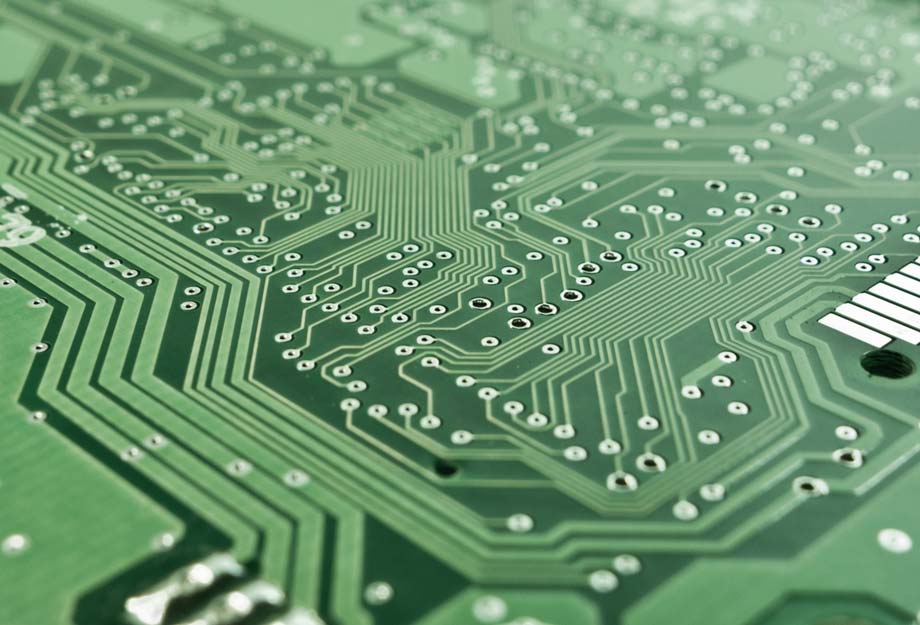
Predicting the future of the tech industry is always challenging, but based on current trends and developments, three major things are likely in the next two years (2024–2025).
Generative AI becomes ubiquitous across industries
Generative AI, powered by models like OpenAI's GPT, will continue to automate creative and cognitive tasks. Expect widespread adoption in content creation, software development, customer service, healthcare, and education. AI tools will become more integrated into everyday workflows.
Key trends:
- AI copilots for coding, design, and writing will become standard tools.
- Industry-specific AI solutions (e.g. legal, medical, and financial) will emerge.
- Ethical concerns and regulations around AI will intensify, especially regarding misinformation, copyright, and job displacement.
Mass adoption of AR/VR and the metaverse
Augmented Reality (AR) and Virtual Reality (VR) will see significant advancements, driven by companies like Apple (with the Vision Pro), Meta, and others. The "metaverse" concept will evolve from hype to practical applications, particularly in gaming, remote work, education, and virtual collaboration.
Key trends:
- AR glasses and VR headsets will become more affordable and user-friendly.
- Virtual workspaces and immersive training programs will gain traction.
- Mixed reality (MR) experiences will blur the lines between physical and digital worlds.
Breakthroughs in green tech and sustainable computing
As climate concerns grow, the tech industry will prioritize sustainability. Innovations in energy-efficient computing, renewable energy integration, and circular economy practices will reshape how technology is developed and consumed.
Key trends:
- Data centers will adopt greener technologies, such as liquid cooling and AI-driven energy optimization.
- Advances in battery technology (e.g. solid-state batteries) will improve the sustainability of electric vehicles (EVs) and consumer electronics.
- Tech companies will face increasing pressure to meet carbon neutrality goals and reduce e-waste through recycling and repair-friendly designs.
These trends will likely shape the tech landscape in the near future, but the pace of innovation means surprises are always possible.
Printing a computer
The concept of "printing a computer" combines advancements in 3D printing, electronics manufacturing, and materials science. A fully functional, complex computer cannot yet be printed in one go.
Current state
3D printing of components. Casings and enclosures are already widely 3D-printed. Companies like Nano Dimension have developed 3D printers capable of printing multi-layered PCBs with conductive and insulating materials. Researchers have demonstrated printing simple electronic components like resistors, capacitors, and even basic transistors.
Additive manufacturing of chips. Printing the silicon chips (CPUs, GPUs, etc.) is far more challenging. These chips are manufactured using highly specialized processes at the nanometer scale, which 3D printing cannot yet replicate. There is ongoing research into alternative materials and methods, such as printed organic electronics and quantum dot transistors.
Hybrid approaches. Some projects combine 3D printing with traditional manufacturing. For example, a 3D-printed computer might include a printed case, PCB, and some components, but still rely on pre-manufactured chips and memory modules.
Challenges
Complexity of modern computers. Billions of transistors packed into a single chip. Replicating this with 3D printing is a monumental challenge.
Material limitations. Current 3D printing materials are not yet capable of matching the performance of silicon-based semiconductors or the precision required for high-speed electronics.
Integration of components. A computer requires software, firmware, and intricate connections between components. Printing all of these in a single process is a long-term goal.
Future possibilities
- Advances in materials science — conductive polymers, graphene, and other nanomaterials could enable printing of high-performance electronic components.
- Printed flexible electronics — flexible and wearable devices using printed electronics could pave the way for more complex systems.
- AI-driven design and manufacturing — AI could optimize the design and printing process.
- Modular printing — print modular components that can be easily assembled, instead of an entire computer at once.
Timeline
- Short term (5–10 years) — continued advancements in 3D-printed PCBs, enclosures, and simple electronic components. Customization and prototyping will become more accessible.
- Medium term (10–20 years) — progress in printable transistors, memory, and other key components could enable basic, low-power computers entirely through 3D printing.
- Long term (20 years) — with breakthroughs in materials science and nanotechnology, it may become possible to print more advanced computers, though they may still lag behind traditionally manufactured systems in performance.
The dream of printing a fully functional, high-performance computer is still far off. Hybrid approaches and modular systems will likely bridge the gap.
Capabilities and limits
- Information Retrieval — detailed explanations, summaries, and insights based on knowledge trained on (up until October 2023).
- Problem Solving — math, science, coding, and more.
- Creativity — writing stories, poems, or brainstorming ideas.
- Language Understanding — understand and generate text in multiple languages; proficiency may vary depending on the language.
- Adaptability — tailor responses to different tones, levels of complexity, or specific needs.
Limits:
- No real-time access to the internet or current events beyond the training cutoff.
- Can't perform physical tasks or interact with the physical world.
- Don't have emotions, consciousness, or independent thought.
- Responses are based on patterns in the training data, so they may occasionally be incorrect or incomplete.
A tool designed to assist and provide information; "power" is limited to the scope of programming and training.