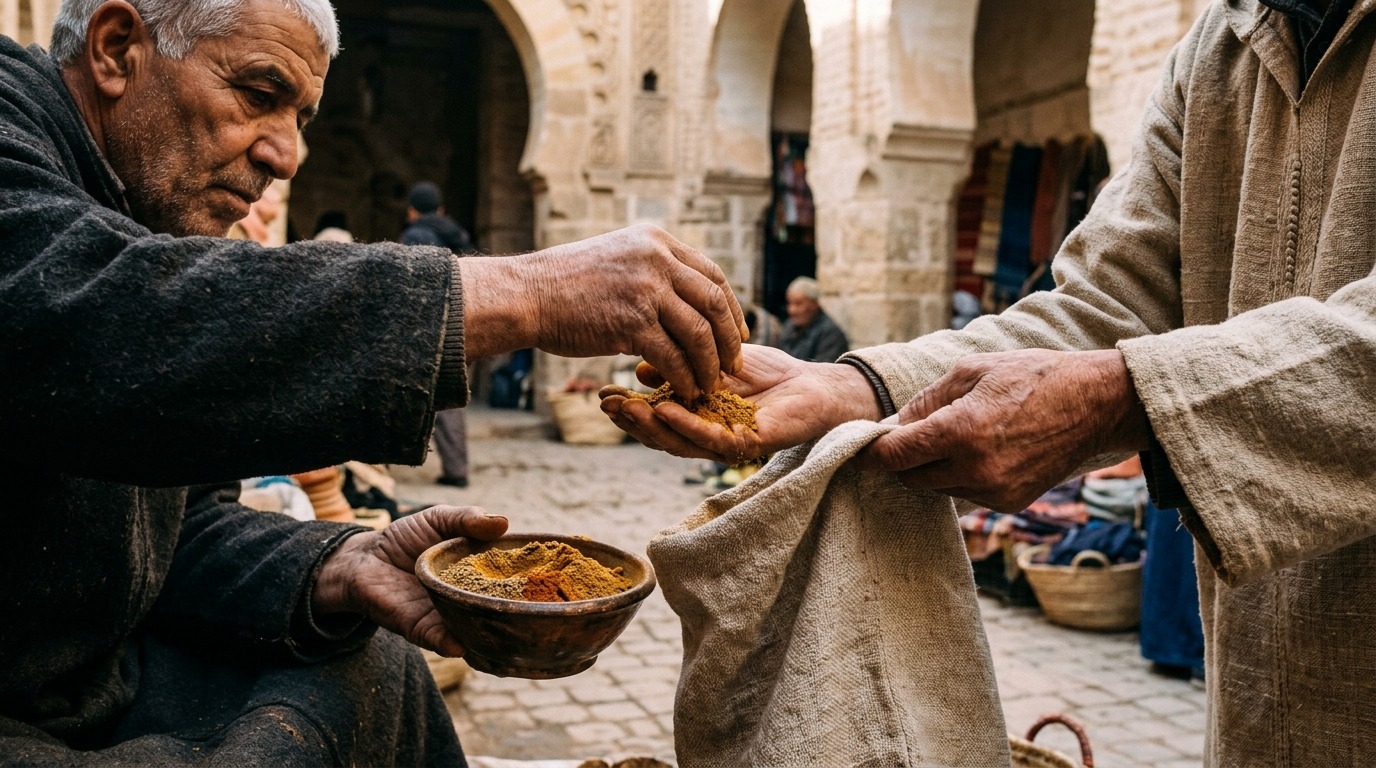



How direct exchange operates without money, and the severe frictions that led societies to create currency.
What is barter?
Barter is a system of exchange where goods or services are directly traded for other goods or services without using a medium of exchange such as money.
The double coincidence of wants
The greatest structural problem with barter is the double coincidence of wants. For a trade to occur, person A must want exactly what person B has, and person B must want exactly what person A has, at the exact same time and in compatible quantities.
If a farmer has extra wheat and needs a pair of boots, they must find a cobbler who happens to need wheat right now. If the cobbler already has plenty of wheat, no trade can happen until the farmer trades wheat for something else the cobbler wants.
Other limits of barter
Beyond the coincidence of wants, direct barter suffers from three major hurdles:
- Indivisibility — You cannot cut a cow or a horse in half to buy a small basket of vegetables without destroying the animal's value.
- Perishability — Fresh milk, fish, or fruit spoil quickly, making it impossible to store wealth for future trades.
- Pricing complexity — In an economy with 100 goods, a barter system requires tracking thousands of individual exchange ratios between every possible pair of items.
These frictions naturally drove human societies to converge on universally accepted intermediate commodities, giving rise to money.
Ai disclosure: written with the help of AI (ChatGPT). You are encouraged to point out errors and omissions.